
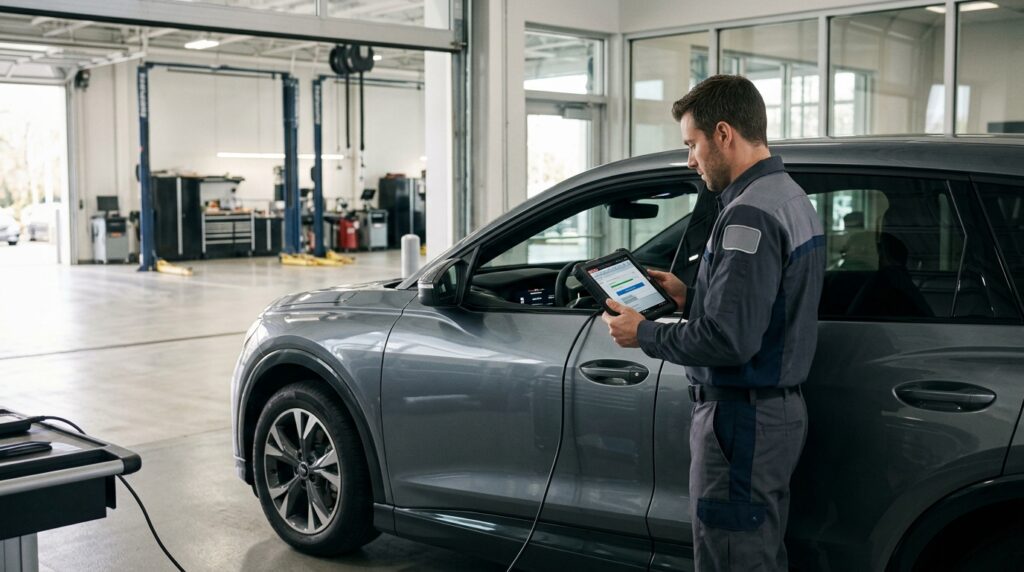
The Cadillac OPTIQ recall 2026 affects nearly 30,000 electric SUVs because the front power windows may not reverse properly when they encounter an obstruction during remote closing.
General Motors reported the recall in September. It covers certain model-year 2025, 2026, and 2027 Cadillac OPTIQ vehicles.
The defect involves the express-up function when owners close the front windows through the key fob. Under certain conditions, a window may continue closing instead of stopping and reversing as expected.
That creates a risk of pinching or injuring a person in the window opening.
The planned repair is notable because many owners will not need a traditional mechanical repair. GM can update the body control module software through a dealership or an over-the-air update.
That raises an increasingly important lemon law question: if an automaker repairs a safety defect through software, does the owner’s warranty and repair history still matter?
Yes. The method used to attempt the repair does not erase a recurring defect.
What Cadillac OPTIQ Recall 26V612 Covers
The National Highway Traffic Safety Administration identifies the campaign as recall 26V612.
GM’s campaign number is N262567230.
The recall covers approximately 29,347 model-year 2025 through 2027 Cadillac OPTIQ electric SUVs.
The problem involves the automatic reversal function for the front power windows.
When a driver closes a front window using the key fob’s remote express-up feature, the system may fail to reverse properly if the glass encounters an obstruction near the top of its travel.
That means the window can continue applying force where the safety system is expected to react.
Why an Automatic Window-Reversal Defect Matters
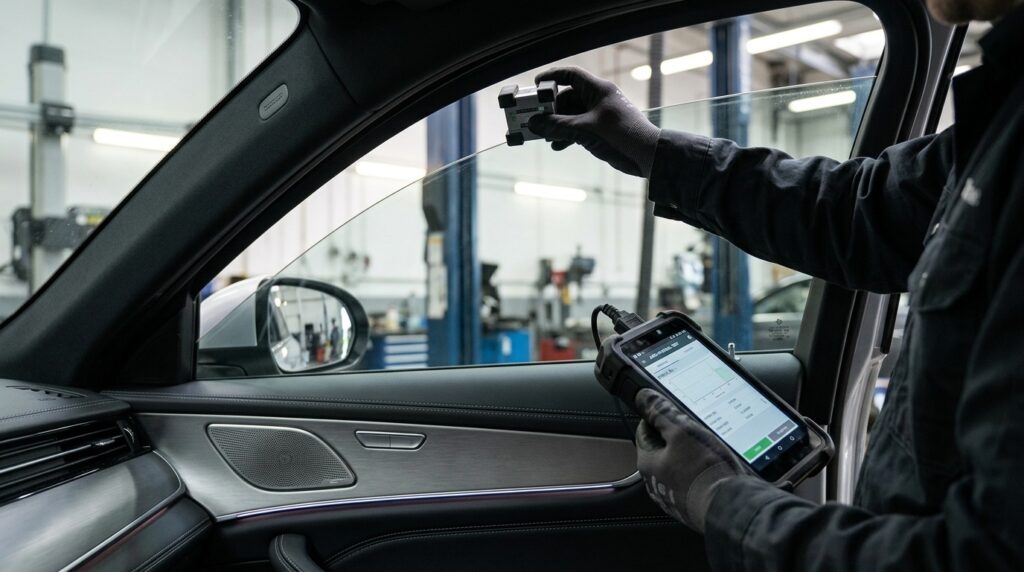
Power windows are convenient, but they can apply enough force to injure a person.
This is why federal vehicle standards include requirements for certain power-operated window systems.
Automatic reversal is designed to reduce the risk when an object, hand, arm, or other obstruction enters the window path.
A failure may be particularly concerning around children, who may not recognize the danger of leaning near a closing window.
Owners should therefore treat the recall as a safety issue rather than a minor convenience problem.
The Defect Appears During Remote Express-Up Operation
The recall is not a statement that every OPTIQ power window fails during normal operation.
The identified condition involves the remote express-up function used through the key fob.
That detail matters when describing the problem to a dealership or documenting a repeat failure.
Owners should explain exactly how the window was being operated.
For example, a repair order should distinguish between a window that will not move at all and a window that fails to reverse during remote express-up operation.
Specific descriptions help technicians diagnose the right system.
They also produce a clearer warranty record if the problem continues.
OTA Updates Are Still Warranty Repairs
Over-the-air updates are changing the way vehicle defects are repaired.
A manufacturer may be able to change software without replacing a physical part or requiring a long dealership appointment.
That convenience is valuable when the update works.
However, an OTA update should not cause owners to ignore what happens next.
If the same safety function continues to fail after the update, document it.
The fact that the first repair occurred remotely does not make a later recurrence irrelevant.
Our recall vs. lemon law guide explains the broader principle. The important issue is whether the defect was actually corrected.
Our recent Rivian rearview-camera recall guide also examines this growing relationship between OTA software remedies and recurring safety defects.
What Owners Should Do Before and After the Update
Start by checking the VIN.
The recall covers specific OPTIQ vehicles, not every example produced during the three listed model years.
Owners can use GM’s official recall lookup or NHTSA’s recall system.
If the vehicle is included, follow the manufacturer’s instructions for the software update.
Keep confirmation that the campaign was completed.
If the update is installed remotely, save any app notification, email, or service record confirming completion.
Do Not Test the Anti-Pinch System With Your Hand
Owners should not deliberately place a hand, arm, or another body part in the window opening to see whether the recall condition exists.
A safety defect should not be tested by creating the exact injury risk the recall is designed to prevent.
If the vehicle displays an error or if the window behaves abnormally during ordinary use, record what happened from a safe position.
Take notes about which window was involved, how it was activated, and whether a warning appeared.
Then contact the dealer.
If the dealership says no problem can be found, keep the repair order anyway.
Our guide to intermittent defects and no-problem-found repair orders explains why these records can still matter.
When an OTA Recall Can Become Relevant to Lemon Law Rights
The Cadillac recall itself does not mean that 29,347 vehicles qualify as lemons.
Most may receive the update and never experience the problem again.
Lemon law analysis focuses on the individual vehicle.
State law may consider the seriousness of the defect, repair attempts, warranty coverage, mileage, time out of service, and whether the problem substantially affects use, value, or safety.
A recurring power-window safety problem can be relevant, but owners should avoid assuming one recall notice automatically creates a buyback right.
Repeated Software Updates Can Build a Repair History
Modern vehicles can receive several software versions during their lives.
Sometimes an automaker releases an update, learns that a problem continues in certain vehicles, and later issues another calibration or repair procedure.
If the OPTIQ receives the recall update and the same power-window issue happens again, report it.
If GM later installs another update, keep documentation of that repair too.
The same applies when the dealer replaces a module or performs additional diagnostics.
Each repair attempt helps establish the history of the defect.
Owners should also note whether other body-control problems occur around the same time, although unrelated problems should not automatically be treated as the same defect.
Documentation Becomes More Important When Repairs Happen Remotely
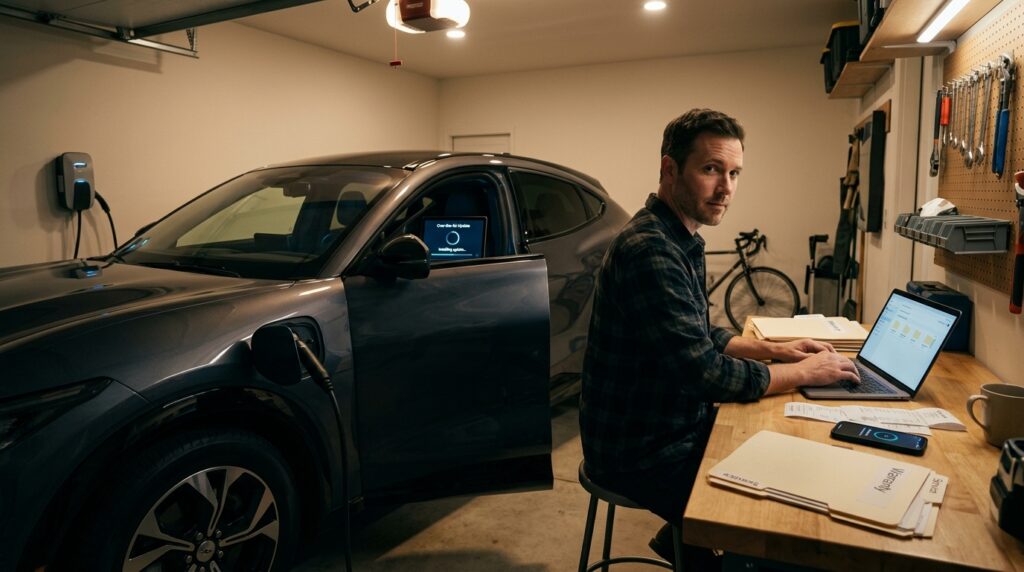
Traditional repairs naturally create paperwork because the owner drops off the car and receives a service invoice.
OTA updates may create less paper.
That makes it useful to preserve digital records.
Save screenshots showing update completion. Keep emails from Cadillac or GM. Download service history from the owner’s account when available.
If the vehicle later visits a dealership, ask the service advisor to include the earlier recall update in the diagnostic history.
Owners dealing with repeated downtime should also review our repair-delay and 30-day rule guide.
California owners may have additional procedural requirements under the state’s 2026 lemon law changes. Our AB 1755 and SB 26 guide explains why consumers should first determine which procedure applies to the manufacturer and model year.
The Cadillac OPTIQ recall 2026 illustrates how vehicle warranty disputes are changing.
The underlying safety problem involves a physical power window, but the planned remedy is software.
For many owners, one successful OTA update may solve the issue without a dealership visit.
For owners whose window problem continues, the next step should be documentation.
Report the recurrence. Save the update record. Create a dealer repair order. Keep notes about the exact symptom.
Do not assume that software defects receive less attention under warranty simply because no physical part was replaced.
The real question is whether the manufacturer’s repair corrected the problem within the requirements of the applicable warranty and state law.
Owners can check their OPTIQ through GM’s official recall system or the National Highway Traffic Safety Administration’s VIN recall lookup.
Legal note: This article provides general educational information and is not legal advice. Lemon laws vary by state, and eligibility depends on the individual vehicle’s warranty, repair history, use, mileage, and other facts.