
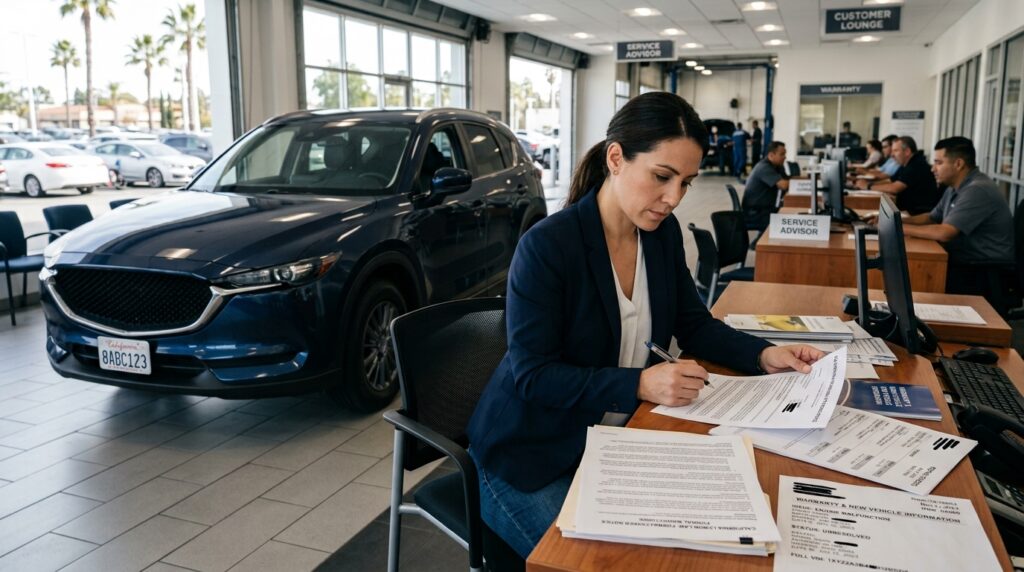
California’s lemon law process changed in a major way after Assembly Bill 1755 and Senate Bill 26. In 2026, some vehicle manufacturers follow a new set of procedures for repurchase, replacement, notice, deadlines, and civil-penalty claims.
The most important point is that the new process does not apply to every manufacturer in the same way. A manufacturer must elect to use the procedures in California Code of Civil Procedure sections 871.20 through 871.30. Manufacturers that do not opt in remain subject to the other California lemon law procedures that apply to their vehicles.
That makes one question especially important before a consumer sends a demand or files a case: which process governs this vehicle? California’s Department of Consumer Affairs publishes information about manufacturers that elected to use the new procedures.
For background on the earlier legislation, read our overview of California AB 1755 lemon law changes. SB 26 later adjusted how several of those rules operate, so this guide focuses on the current 2026 process.
How the AB 1755 and SB 26 Process Works in 2026
AB 1755 created a new chapter of procedures for certain California motor vehicle restitution and replacement cases. Governor Gavin Newsom signed it in September 2024.
SB 26 followed in April 2025. It changed important parts of the rollout and made the new procedures optional for manufacturers that choose to opt in.
For manufacturers covered by the election, the rules can affect pre-suit notice, response deadlines, possession of the vehicle, civil penalties, and filing deadlines. The notice provision became operative on July 1, 2025.
The California Department of Consumer Affairs explains that manufacturers may opt into the new procedures or remain under other California lemon law processes.
First Check Whether the Manufacturer Opted In
Do not assume that every California lemon law claim follows the same new notice process.
Under SB 26, a manufacturer may elect to be governed by Code of Civil Procedure sections 871.20 through 871.30. The election applies to covered vehicle years and cannot simply be withdrawn during the applicable five-year election period.
The Department of Consumer Affairs must publish a list of manufacturers that made the election. California law also requires notice at the time of a new-vehicle sale about which procedures govern that vehicle. The new chapter applies only when the manufacturer made the required election for the relevant vehicle year.
Consumers can review the California Department of Consumer Affairs guide to the new lemon law procedures and the agency’s current opt-in manufacturer information.
The Written Notice Is Especially Important for Civil Penalties
For an opt-in manufacturer, California Code of Civil Procedure section 871.24 creates a specific notice step before a consumer starts an action seeking civil penalties.
The consumer must send the notice at least 30 days before starting that action. The notice must identify the consumer, include the correct VIN, summarize the vehicle’s repair history and problems, and demand repurchase or replacement.
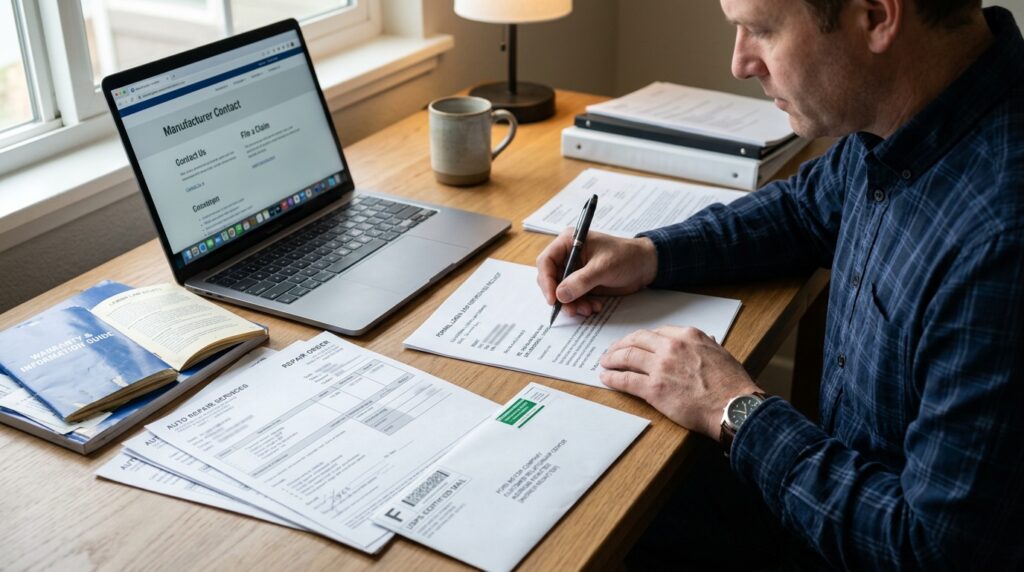
The notice must be in writing. It can be sent to the email address that the manufacturer displays for this purpose. It can also be sent by certified or registered mail, with return receipt requested, to the address listed in the owner’s manual or warranty booklet.
Manufacturers using the new process must make that notice information available in English and Spanish.
Keep proof of what was sent and when the manufacturer received it. Save the email, delivery confirmation, return receipt, and a copy of the notice.
A Repurchase or Replacement Case Can Be Filed Without That Notice, but There Is a Tradeoff
The rule has an important detail that is easy to miss.
For an opt-in manufacturer, a consumer may start an action seeking restitution or replacement without first sending the notice described above. However, the statute says the consumer cannot seek civil penalties in that action when the notice step was skipped.
That distinction matters. A repurchase or replacement request may follow one path, while a claim that also seeks civil penalties can trigger the pre-suit notice requirement. Because the choice can affect legal remedies, legal advice may be useful before filing.
What Happens After the Manufacturer Receives the Demand?
The new process creates a clear response timeline when the consumer gives the required notice.
If the manufacturer receives a proper repurchase or replacement demand, it has 30 days to make a qualifying offer if it wants to avoid a civil-penalty claim under this procedure.
The manufacturer then must complete the restitution or replacement within 60 days from receipt of the original notice if the statutory conditions are met.
The consumer must also cooperate in good faith with reasonable requests for documents. DCA says the manufacturer must acknowledge receipt of the request.
Vehicle Possession Matters During the 30- and 60-Day Periods
The consumer generally must still possess the vehicle when the notice is sent.
After the manufacturer receives the written notice, the consumer must keep possession for at least 30 days. If the manufacturer makes a qualifying restitution or replacement offer, the consumer must generally keep the vehicle for the full 60-day period after receipt of the notice.
If the manufacturer does not make an offer within 30 days, the statute allows the consumer to sell the vehicle and continue to seek certain remedies. Extra disclosure rules apply if the consumer wants to preserve a claim for civil penalties after selling it.
That makes an early sale or trade-in risky. Keep the vehicle, repair records, title documents, payoff information, and manufacturer communications organized while the demand is pending.
How Consumers Can Prepare for the New California Lemon Law Process
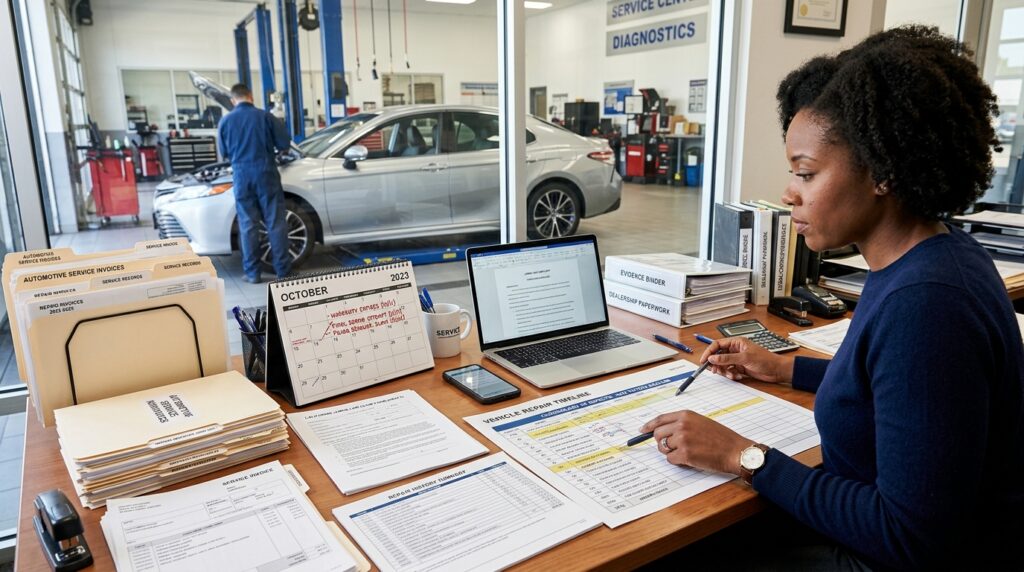
The safest approach is to build a complete file before making a formal demand.
Start with every repair order. Add the purchase or lease agreement, warranty booklet, registration, recall notices, messages, and records showing how long the vehicle stayed at the dealer. Create a timeline of each defect, mileage, repair visit, and repeat problem.
Our guide to filing a lemon law claim explains why repair records and a clear defect history are useful when preparing a warranty dispute.
Deadlines and Documentation Can Change the Outcome
The opt-in procedures also contain filing deadlines. An action covered by Code of Civil Procedure section 871.20 generally must begin within one year after the applicable express warranty expires.
The same chapter also creates an outside limit of six years from the vehicle’s original delivery date. Certain periods can toll, or pause, those deadlines. Examples include time when the vehicle is out of service for repair and a limited period after a proper pre-suit notice.
Record the original delivery date, warranty expiration, and every period when the vehicle was unavailable because of repairs. These dates can affect the filing analysis.
A Simple 2026 Checklist Before Sending a Lemon Law Demand
Before sending a repurchase or replacement demand in California, confirm the basic facts.
- Check which procedure governs the manufacturer and vehicle year.
- Confirm the exact 17-character VIN.
- Gather every repair order and final invoice.
- Write a short, accurate summary of the recurring problems.
- Identify the applicable manufacturer’s warranty.
- Check the vehicle’s original delivery date and warranty expiration.
- Decide whether the demand seeks repurchase or replacement.
- Use the manufacturer’s designated notice email or mailing address.
- Keep proof that the manufacturer received the notice.
- Do not sell or trade the vehicle without first considering the possession rules.
A clean record makes it easier to show which defects were reported, how often the dealer tried to repair them, and how long the vehicle remained out of service. Documentation still matters.
AB 1755 and SB 26 added another layer to that lesson. In 2026, consumers also need to know which legal process applies before relying on a notice deadline or filing strategy.
For an opt-in manufacturer, a written demand can affect civil penalties, response deadlines, vehicle possession, and what happens next. For a manufacturer that did not opt in, different California lemon law procedures may govern.
Do not rely only on an old article, dealership statement, or general online checklist. Check the current Department of Consumer Affairs information, review the warranty documents, and keep a complete repair file.
Disclaimer: This article provides general educational information only and is not legal advice. California lemon law procedures depend on the manufacturer, vehicle year, warranty, repair history, remedies requested, filing date, and other facts. Consumers should confirm current law and consider speaking with a qualified California attorney about a specific claim.