
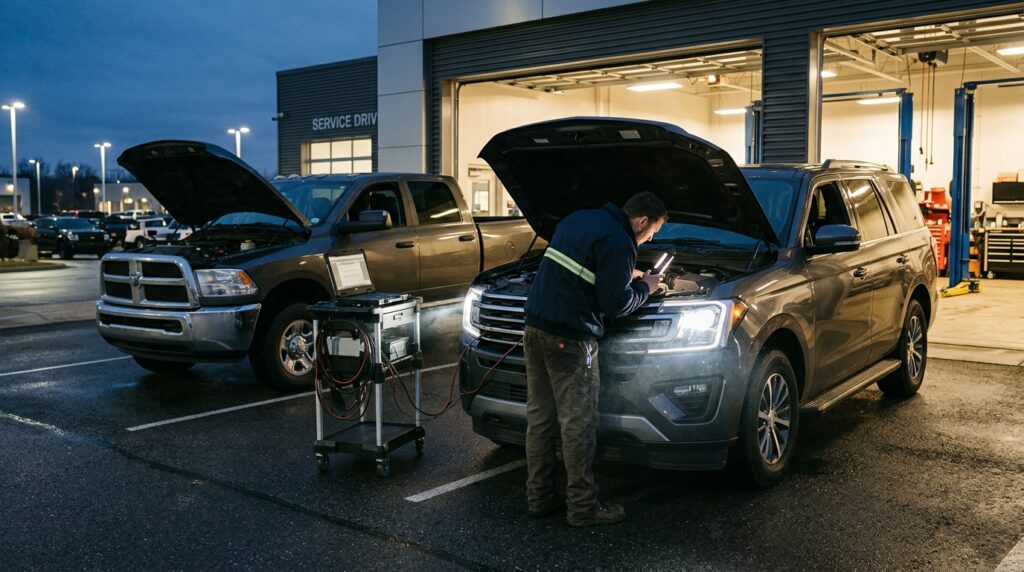
The Ford headlight recall 2026 affects more than 41,000 Expedition SUVs and Super Duty trucks because a defect inside the headlight assemblies can cause exterior lights to stop working.
The recall covers certain 2025 through 2027 Ford Expedition vehicles and model-year 2026 F-250, F-350, F-450, and F-550 Super Duty trucks.
According to federal recall information, contamination beneath an LED chip can cause several lighting functions to fail. Depending on the affected assembly, a vehicle may lose its daytime running lights, parking lights, low beams, or high beams.
A headlight problem may appear less dramatic than an engine or brake failure. At night, however, loss of exterior lighting can make it harder for the driver to see and harder for other road users to see the vehicle.
Ford plans to inspect the affected assemblies and replace defective headlights at no cost.
For owners who have already experienced repeated lighting failures, electrical warnings, or unsuccessful repairs, the recall may also raise lemon law questions.
What Ford Recall 26V606 Covers
The National Highway Traffic Safety Administration identifies the campaign as recall 26V606. Ford uses campaign number 26C43.
The recall involves 41,748 vehicles.
Affected models include the 2025, 2026, and 2027 Ford Expedition, along with 2026 versions of the F-250, F-350, F-450, and F-550 Super Duty.
The problem is located inside the headlight assembly.
A contaminated LED chip can malfunction and cause one or more exterior lighting functions to stop working.
Federal regulators say the vehicles may fail to meet lighting requirements under Federal Motor Vehicle Safety Standard No. 108.
Why a Headlight Failure Can Become a Safety Problem
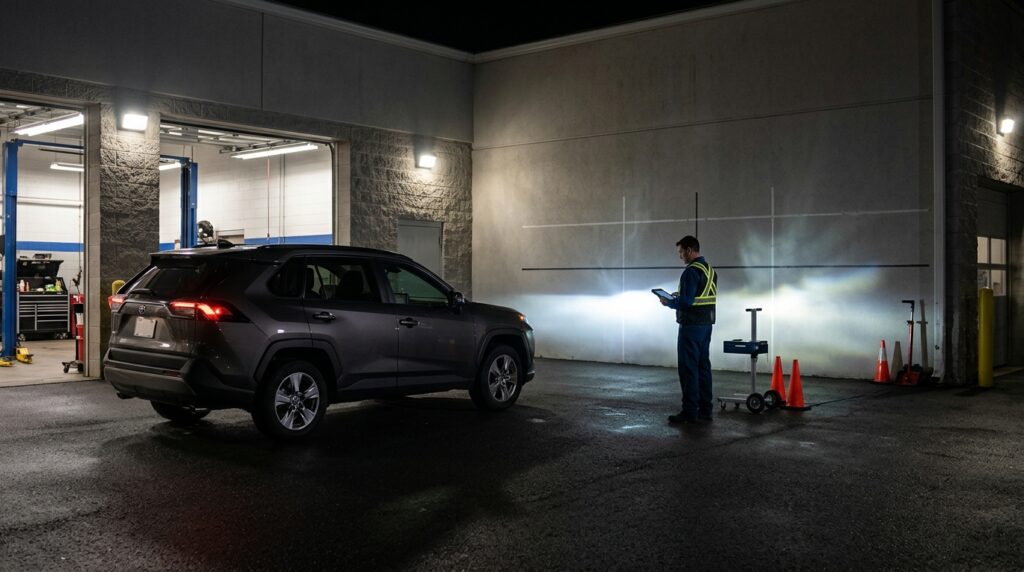
Low beams and high beams perform an obvious safety function after dark.
They help drivers identify curves, pedestrians, animals, stalled vehicles, road debris, and lane markings.
A sudden lighting failure can sharply reduce the distance a driver can see.
Parking lights and daytime running lights serve different functions, but they also help make the vehicle more visible to others.
That means an exterior-lighting defect can affect both the driver’s view and the vehicle’s visibility.
The risk increases on rural roads, in bad weather, and on highways without strong overhead lighting.
The Defect Can Affect Several Lighting Functions
One important feature of the Ford recall is that the problem is not limited to one specific lamp function.
The contaminated LED chip can affect daytime running lights, parking lights, high beams, or low beams.
Owners may therefore experience different symptoms.
One driver may notice a low beam that stops working. Another may receive a dashboard warning. Another vehicle may have a problem with a different part of the exterior lighting system.
This can make documentation important.
Write down which lights failed and whether the problem affected one side or both sides.
Take a photograph or video while safely parked if the condition is visible.
Do not attempt to document a headlight failure while driving.
Intermittent Lighting Problems Can Be Hard for a Dealer to Reproduce
Electrical and LED problems can be intermittent.
A light may fail on the way to the dealership and then work normally once the technician begins testing.
That does not mean the original complaint was imaginary.
If a dealer says it cannot reproduce the problem, make sure the repair order still describes the owner’s complaint accurately.
For example, it should state that the low beam stopped working or that the dashboard displayed a lighting warning.
Our intermittent vehicle defect guide explains how to build a repair history when a dealership repeatedly writes “no problem found.”
The same approach applies after the recall repair.
If a replacement headlight later fails again, return to the dealer and create another repair order.
Does a Ford Headlight Recall Make the Vehicle a Lemon?
No. A safety recall does not automatically make every affected vehicle a lemon.
A recall identifies a safety defect or compliance problem across a group of vehicles.
Lemon law focuses on the consumer’s individual vehicle and repair history.
Requirements differ across the country.
Many state laws consider whether a warranty-covered defect substantially affects use, value, or safety and whether the manufacturer had a reasonable opportunity to repair it.
A headlight defect can be safety-related, especially when low beams or high beams fail. Still, the facts of the individual case matter.
Repeated Repairs Matter More Than the Recall Headline
Consider two Expedition owners.
The first receives the recall notice, visits the dealer once, gets both affected assemblies inspected, and never experiences a lighting problem afterward.
The second owner has already made several warranty visits for headlights that fail intermittently. The recall repair is completed, but the low beam fails again a week later.
Those owners have very different repair histories even though their vehicles may fall under the same campaign.
That difference is why our recall vs. lemon law guide recommends focusing on what happened to the specific vehicle rather than assuming the recall proves or defeats a claim.
Keep repair orders from visits that occurred before the recall was announced. They can help show when the defect first appeared.
What Expedition and Super Duty Owners Should Do Now
First, check the vehicle identification number.
Not every Expedition or Super Duty from the listed model years is automatically included.
NHTSA and Ford provide recall lookup tools that allow owners to check a specific VIN.
If the vehicle is included, follow the manufacturer’s repair instructions.
Ford dealers are expected to inspect both headlight assemblies and replace affected units without charging the owner.
Save the completed repair order even if the repair appears successful.
That record can become important if the same symptom returns later.
Pay Attention to Lighting Warnings After the Repair
Owners should not assume every future lighting problem is unrelated simply because the recall work was completed.
Watch for warning indicators, flickering lamps, lights that fail to illuminate, uneven beam output, or repeat failures of the same assembly.
If the condition returns, schedule another warranty inspection.
Describe the problem clearly.
Tell the service advisor that the vehicle already received recall 26V606 if that is the case.
This creates a clearer timeline for both diagnosis and any later warranty dispute.
Time in the Shop Can Matter Along With Repair Attempts
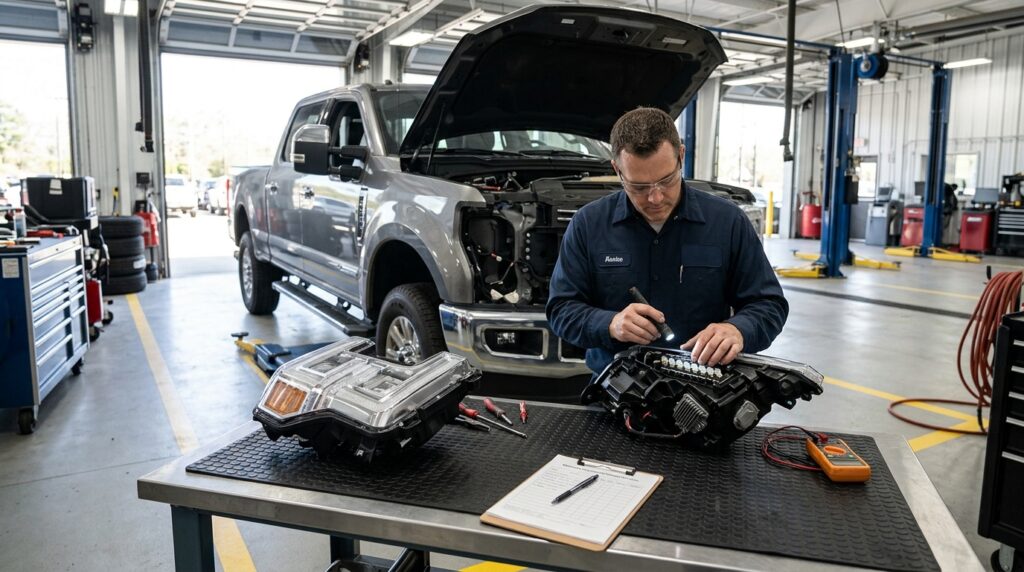
A vehicle may not need five or six identical repairs before a consumer starts asking questions.
State lemon laws use different standards.
Some place particular importance on serious safety defects. Others also provide presumptions based on cumulative time out of service.
If the dealer keeps the Expedition or Super Duty for an extended period while waiting for headlight assemblies, electronic components, or engineering instructions, record every day the vehicle is unavailable.
Our guide to the 30-day rule and repair backlogs explains why out-of-service time may matter, while also noting that state-specific requirements must be checked.
California owners should also understand the newer procedural rules discussed in our California lemon law notice rules for 2026.
The Ford headlight recall 2026 deserves attention because a loss of low beams or high beams can create a serious nighttime visibility problem.
The campaign covers more than 41,000 Expedition and Super Duty vehicles and involves potentially defective LED chips inside the headlight assemblies.
Ford’s recall remedy is the first step. Owners should have the repair completed and save the paperwork.
If the lighting problem returns, do not assume another warning or lamp failure is normal.
Return to the dealer. Explain the symptom. Create another repair record.
A recall does not automatically establish lemon law eligibility, but repeated warranty-covered lighting failures, unsuccessful repairs, or significant time out of service can become relevant depending on the applicable state law.
Owners can check recall status through Ford’s official recall support system or the National Highway Traffic Safety Administration’s VIN recall lookup.
Legal note: This article is general educational information and is not legal advice. Lemon law requirements differ by state and depend on warranty coverage, repair history, ownership facts, and other circumstances.