
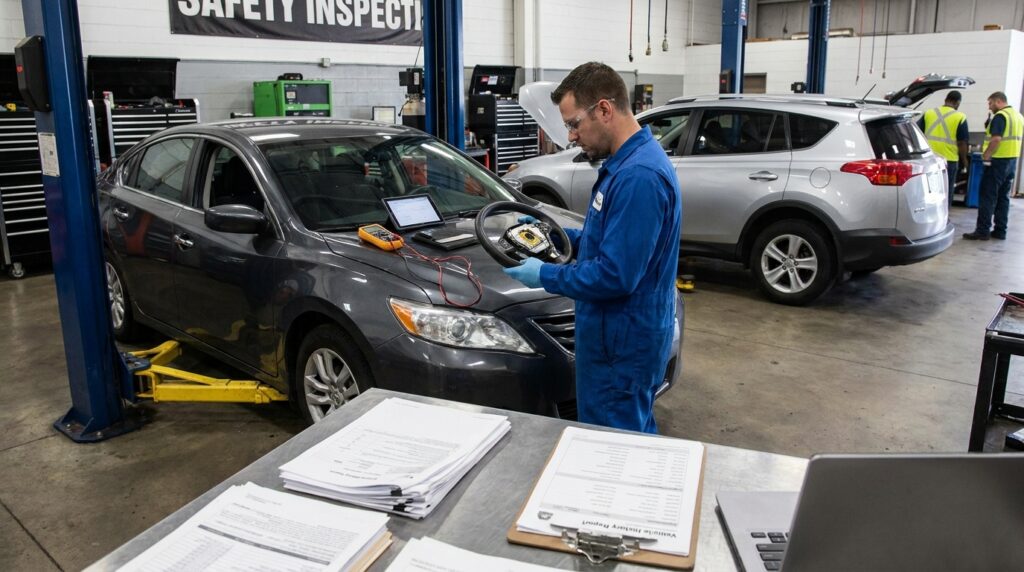
A new federal safety warning is putting used-car buyers and owners on notice about a danger that may not appear in an ordinary VIN recall search. On September 3, 2026, the National Highway Traffic Safety Administration announced that a defective replacement driver air-bag inflator identified as DTN60DB has now been linked to 11 deaths and three serious injuries in the United States.
The latest fatality involved a 2018 Chevrolet Equinox in Dallas on August 27. NHTSA said the crash should otherwise have been survivable. The agency previously linked the same replacement inflators to deaths and severe injuries involving Chevrolet Malibu and Hyundai Sonata vehicles.
The problem is unusual because these are not factory-installed inflators supplied through the original vehicle manufacturer. They are replacement inflators believed to have been illegally imported and installed after earlier crashes in which the original air bags deployed. NHTSA banned their sale and importation earlier in 2026.
For used-car shoppers, the warning creates an important lesson: a normal test drive and even a VIN search showing no open recall do not necessarily reveal every safety problem created by prior collision repairs. Buyers need to understand accident history and, in some cases, have the air-bag system professionally inspected.
What NHTSA Says About the DTN60DB Air-Bag Inflators
NHTSA says the affected frontal driver air-bag inflators are marked with the identifier DTN60DB. Instead of safely inflating the air bag during a crash, the defective units can rupture and propel metal fragments toward the driver, creating a risk of catastrophic injury.
All known incidents have involved vehicles in which the original driver air bag had previously been replaced. That distinction matters. The warning does not mean every Chevrolet Equinox, Chevrolet Malibu, or Hyundai Sonata contains one of these inflators. The concern is whether a particular used vehicle received a dangerous replacement component during earlier collision repair.
Why Used-Car Buyers Cannot Rely on a VIN Recall Search Alone
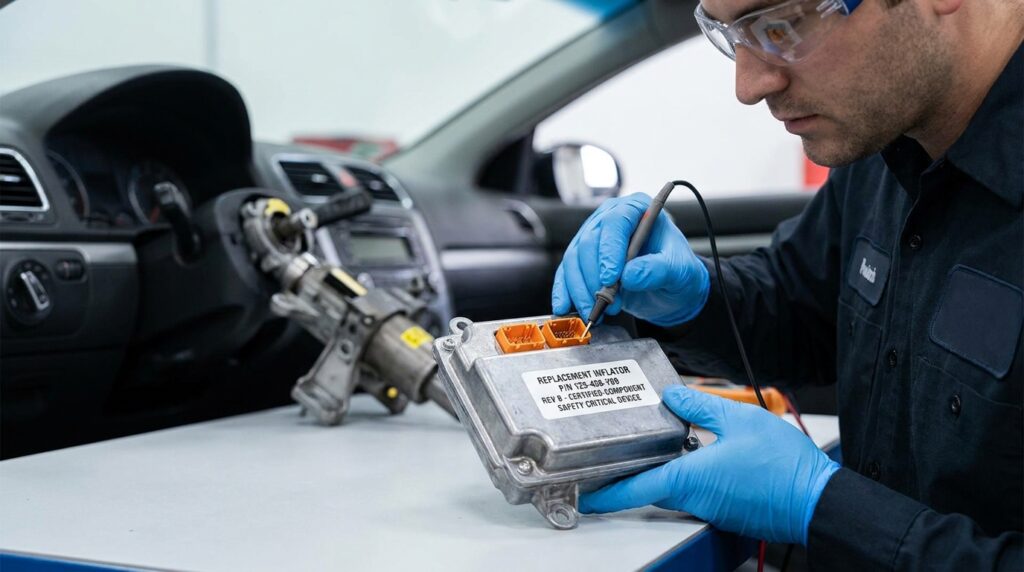
Checking a VIN through NHTSA remains an essential step when buying a used vehicle, but NHTSA specifically warns that a VIN search cannot tell an owner whether a DTN60DB inflator has been installed. These replacement components were not necessarily installed through the manufacturer’s authorized repair network.
Buyers therefore need to look beyond open recalls. A vehicle-history report may reveal a prior collision, insurance loss, salvage event, or other record suggesting the air bags could have deployed. Buyers should also request available repair invoices and ask whether the vehicle has ever had air-bag replacement work.
A Previous Crash With Air-Bag Deployment Is the Key Warning Sign
NHTSA urges owners of used vehicles involved in a crash with air-bag deployment since 2020 to consider professional inspection, especially when the repair was not performed by a dealership for the vehicle manufacturer. Buyers who do not know the vehicle’s history should obtain a vehicle-history report.
A repaired bumper or replaced body panel may be mostly cosmetic, but an air-bag deployment means the supplemental restraint system required significant repair. If unknown or counterfeit components entered the system, the consequences may not become visible until another collision occurs.
For a broader pre-purchase checklist, read Used Car Lemon Law in 2026: What Buyers Should Check Before Filing a Claim. That guide explains why warranty status, title history, prior repairs, open recalls, and written dealer disclosures should be reviewed before purchase.
Do Not Attempt to Inspect the Air Bag Yourself
This is not a do-it-yourself inspection. NHTSA warns consumers not to dismantle a steering wheel or remove an air-bag cover to look for the inflator. Air-bag systems contain pyrotechnic components and can cause severe injury if handled improperly.
A manufacturer dealership or reputable independent repair shop can inspect the system using NHTSA’s technician guidance. The agency says a technician may identify the suspect inflator through the DTN60DB marking or related identifying numbers.
If a DTN60DB inflator is found, NHTSA says the vehicle should not be driven until it has been replaced with a legitimate component equivalent to the original. Current NHTSA guidance also states that the owner is responsible for the inspection and replacement costs in this situation.
How This Safety Issue Can Intersect With Lemon Law and Used-Car Rights
The presence of a banned replacement inflator does not automatically create a traditional lemon law claim. State lemon laws commonly focus on defects covered by a manufacturer warranty and whether the manufacturer or its authorized repair network had a reasonable opportunity to fix the problem.
A dangerous aftermarket or illegally imported part installed during a previous collision repair may raise different questions. Depending on the state and facts, dealer disclosure, warranty promises, misrepresentation, certified pre-owned representations, collision-repair practices, title history, or other consumer-protection laws may be more directly relevant.
Warranty Coverage and Who Installed the Part Matter
Suppose a used vehicle was sold with a written dealer warranty or certified pre-owned coverage and the buyer later discovers an unsafe replacement inflator. The written documents, inspection claims, repair promises, and seller disclosures may become important. The analysis could be very different if the vehicle was sold “as is” by a private seller.
A manufacturer also should not automatically be blamed for a replacement component it did not produce, authorize, or install. Consumers need to identify the repair history before assuming which party may be responsible.
Keep the Buyers Guide, sales contract, warranty, certified pre-owned inspection checklist, vehicle-history report, advertisements, repair invoices, title documents, and written communications from the dealer.
If the vehicle has a branded history, review Lemon Law Buyback Titles: What They Mean for Used Car Buyers. A buyback title is different from a prior collision, but both situations show why buyers should investigate history instead of judging a used vehicle only by appearance and price.
What Used-Car Owners and Buyers Should Do Now
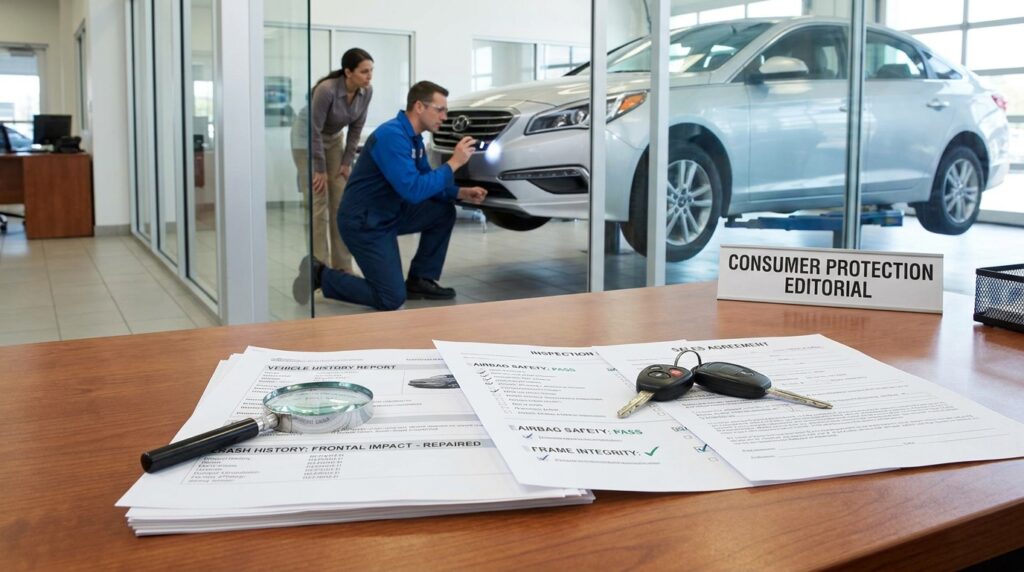
First, determine whether the vehicle has a meaningful prior crash history. If you already own it, review the purchase paperwork and obtain a current vehicle-history report if the history is unclear. Look for collisions, salvage records, insurance-loss events, air-bag deployment indicators, and major body repairs.
If you are shopping, ask specific questions before signing. Has the vehicle ever been in a crash? Did any air bags deploy? Who completed the repairs? Were manufacturer-equivalent components used? Are invoices available? Was the vehicle inspected after repair?
Do not rely solely on a salesperson saying the car has been “fully inspected.” Ask what was actually checked and get significant representations in writing whenever possible.
A Professional Inspection Can Be More Valuable Than a Clean Test Drive
A dangerous replacement inflator may not cause a dashboard warning or change how a vehicle drives. The steering, brakes, engine, transmission, and electronics may appear normal during a test drive. The defect can remain hidden inside the steering-wheel air-bag assembly until a collision triggers deployment.
That is what makes this issue particularly difficult for buyers. An unsafe replacement inflator may provide none of the clues people normally watch for when evaluating a used car.
Keep the Inspection and Repair Paper Trail
If an inspection finds a suspect inflator, obtain a written report identifying what was found. Keep photographs produced by the technician, part numbers, replacement invoices, and communications with the dealer, repair shop, insurer, or previous seller.
If the seller represented the vehicle as accident-free, certified, fully repaired, or equipped only with genuine components, preserve those statements. Save online listings, emails, text messages, and dealership paperwork.
Consumers also dealing with an ordinary manufacturer recall should read Recall vs. Lemon Law: Why a Free Repair May Not Be Enough to understand how manufacturer recalls differ from repeated warranty defects and individual lemon law claims.
For official safety guidance, review NHTSA’s Deadly Air Bag Replacements guidance. NHTSA says consumers should use a qualified dealership or reputable mechanic for inspection and should not drive a vehicle confirmed to contain a DTN60DB inflator until it is replaced.
lesson
The larger lesson extends beyond the 14 known crashes. Used vehicles can contain repairs and replacement parts that are not obvious from a normal inspection or VIN recall search. Accident history, repair quality, and documentation all matter.
A lower-priced used vehicle is not a bargain if critical safety equipment was repaired with dangerous parts. Before buying a vehicle with significant collision history, verify what happened, identify who performed the repairs, review the paperwork, and consider an independent inspection focused on the systems affected by the crash.
If you already own a vehicle that had an air bag deploy in a prior crash since 2020, especially one repaired outside a manufacturer dealership, take NHTSA’s warning seriously and have the system professionally checked.
Disclaimer: This article provides general educational information and is not legal advice. Lemon law, warranty, dealer-disclosure, fraud, collision-repair, and other consumer-protection rights vary by state and depend on the facts. Consumers seeking advice about an individual vehicle or transaction should consult a qualified attorney or appropriate government consumer-protection agency.