
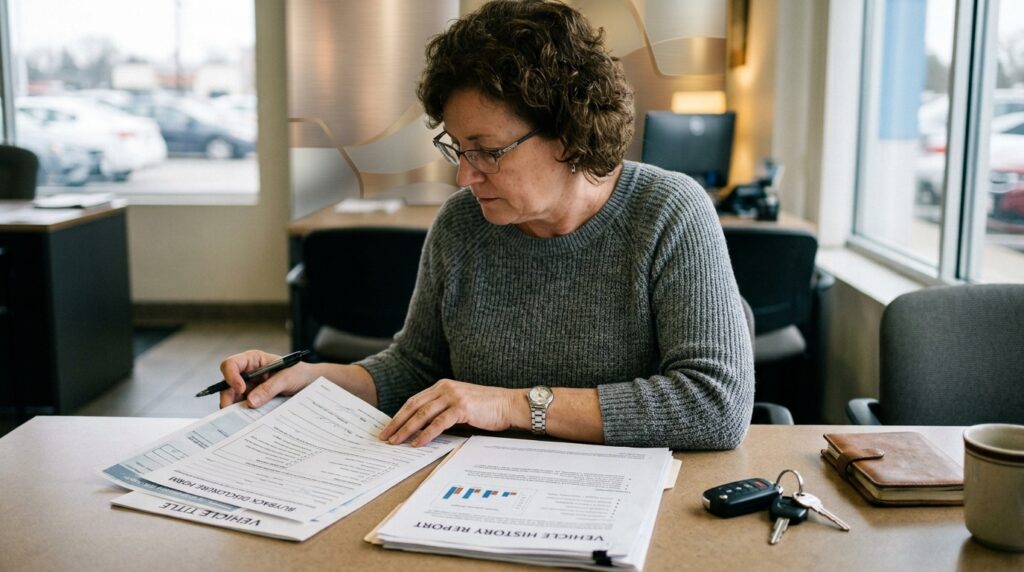
A lemon law buyback title can change everything about a used car purchase. The vehicle may look clean, drive normally during a short test drive, and even be priced below similar models. But if it was previously repurchased by a manufacturer because of a serious defect, buyers need to slow down and review the paperwork carefully.
A lemon law buyback generally means the manufacturer took the vehicle back after a consumer warranty dispute involving a defect. The exact process depends on state law, but the idea is simple: the vehicle had a problem serious enough that the manufacturer repurchased or replaced it for the original owner. After that, the vehicle may be repaired, retitled, disclosed, and resold.
That does not automatically mean every buyback vehicle is unsafe or worthless. Some may be repaired properly and sold with clear disclosure. Others may continue having problems, lose resale value, or create headaches for the next owner. For used car buyers, the issue is not only whether the vehicle is cheap. The real question is whether the title history, defect history, repair records, warranty coverage, and disclosure documents make the purchase worth the risk.
This article explains what a lemon law buyback title means, what buyers should check, and why documentation matters before signing anything. This is general consumer information only and should not be treated as legal advice.
What Is a Lemon Law Buyback Title?
A lemon law buyback title is a branded title or title history notation showing that a vehicle was previously repurchased by a manufacturer under lemon law or warranty-related consumer protection rules. Title branding is meant to warn future buyers that the vehicle has a serious history. The specific wording can vary by state and may appear as “Lemon Law Buyback,” “Manufacturer Buyback,” “Warranty Return,” or another similar brand.
Buyers should understand that a buyback title is different from ordinary used car wear. Every used car has some history, but a lemon law buyback has a specific legal and warranty-related background. It was not simply traded in because the owner wanted a new model. It was returned after a defect dispute serious enough to trigger a repurchase or replacement process.
Why Manufacturers Resell Buyback Vehicles
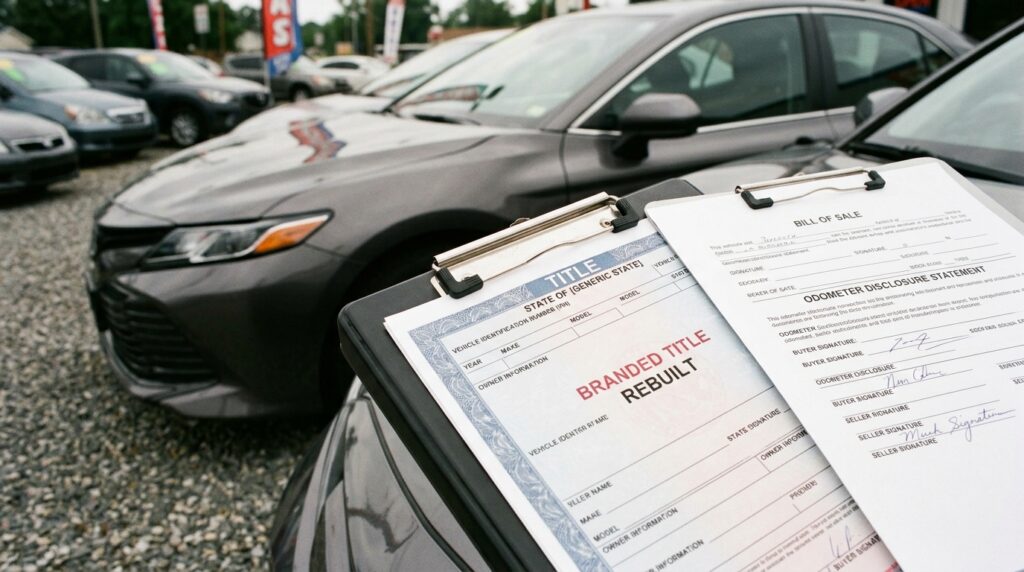
After a manufacturer repurchases a defective vehicle, the vehicle does not always disappear from the market. In many cases, the manufacturer or dealer may repair it, complete required disclosures, brand the title, and resell it. This is allowed in many states when disclosure rules are followed.
The risk for buyers is that the original defect may not be fully resolved. A manufacturer may believe the vehicle has been repaired, but the buyer needs evidence. That evidence should include the original defect disclosure, repair records, warranty terms, and title history. Without those records, the buyer is guessing.
A buyback title can reduce resale value
A lemon law buyback title can make the vehicle harder to resell or trade in later. Even if the car runs well, future buyers, lenders, and dealers may treat the title brand as a major risk factor. That can reduce the price someone is willing to pay.
This matters because some buyers focus only on the discount at purchase. A lower price may look attractive, but the long-term value may also be lower. If you save money upfront but later struggle to sell the vehicle, trade it in, or finance it, the deal may not be as good as it first appeared.
The disclosure should explain the defect
A proper disclosure should do more than say “buyback.” Buyers should ask what defect caused the vehicle to be repurchased and what repairs were made. Was it an engine issue, transmission defect, battery failure, electrical problem, brake concern, safety technology failure, water leak, or software defect?
The more specific the disclosure, the better. A vague statement gives the buyer very little protection. A clear statement helps the buyer decide whether the repair history makes sense and whether an independent mechanic should inspect a specific system before purchase.
How Buyers Can Check a Buyback Vehicle Before Purchase
Before buying any used vehicle with a possible buyback history, start with the VIN. Check the title history, vehicle history report, recall status, warranty coverage, and repair documents. Do not rely only on a salesperson’s verbal explanation. A buyback vehicle is a paperwork-heavy purchase, and the paperwork is what protects you.
The Federal Trade Commission recommends checking vehicle history through the National Motor Vehicle Title Information System, also called NMVTIS. The official NMVTIS vehicle history website can direct consumers to approved providers that sell reports using title, insurance loss, and salvage information.
You should also check for open recalls through the NHTSA recall lookup tool. A recall is not the same as a lemon law buyback, but open recalls can reveal unresolved safety problems that should be handled before purchase or immediately after.
Do not trust a clean-looking title alone
A title can look clean to a buyer who does not know what to search for. Title brands may appear differently depending on the state, and vehicle history information may update separately from the paper document. That is why buyers should compare multiple records: the title, dealer disclosures, vehicle history report, manufacturer documents, and repair history.
If a dealer says the vehicle has no title issue, ask for that statement in writing. If the vehicle history report shows a buyback brand but the dealer says it does not matter, stop and get clarification before signing. A buyback history is not a small detail. It can affect value, safety, financing, warranty confidence, and future resale.
Should You Buy a Lemon Law Buyback Vehicle?

Buying a lemon law buyback vehicle is not always a mistake, but it is never something to do casually. The price should reflect the risk. The disclosure should be clear. The defect should be explained. The repair history should be complete. The warranty should be written. The vehicle should be inspected by an independent mechanic who understands the affected system.
Some buyers may decide the discount is worth it if the defect was minor, repaired properly, and backed by strong warranty coverage. Other buyers may walk away because the original defect involved safety, electrical systems, engine performance, transmission reliability, EV battery issues, or advanced driver assistance systems. Both reactions can be reasonable. The right answer depends on the facts.
Questions to Ask Before Signing
Before buying a buyback vehicle, ask direct questions. What defect caused the buyback? Who repaired it? When was it repaired? Are repair records available? Is there a manufacturer warranty? Is there a dealer warranty? Are there open recalls? Has the vehicle had the same problem after the buyback repair? Will the dealer put all disclosures in writing?
If the seller avoids these questions, that is a warning sign. A legitimate buyback sale should be transparent. The buyer should not have to fight for basic information about the vehicle’s defect history.
For used car claim basics, read Used Car Lemon Law in 2026: What Buyers Should Check Before Filing a Claim. If the buyback vehicle has recurring defects after purchase, your site’s guide on How to File a Lemon Law Claim can help buyers understand why repair orders, warranty documents, and timelines matter.
Get the car inspected before purchase
An independent inspection is especially important for a buyback vehicle. Do not settle for a general walkaround. Ask the mechanic to focus on the system connected to the original defect. If the buyback was related to transmission problems, the inspection should include transmission behavior. It involved electrical failures, the mechanic should scan modules and check for stored codes. If it involved EV charging or battery issues, the inspection should focus on charging history, battery health, and related warnings.
Buyers should also compare the defect history with common lemon law issues. Your site’s article on Common Defects That Qualify for Lemon Law Claims is a helpful internal resource because it covers recurring engine, transmission, brake, steering, suspension, and electrical problems.
A lemon law buyback title is not just a label. It is a warning to investigate. Some buyback vehicles may be repaired and usable. Others may carry the same defect into the next owner’s driveway. The difference often comes down to documentation, inspection, warranty protection, and honest disclosure.
If you are considering a buyback vehicle, do not rush because the price looks good. Check the VIN, read the title history, demand written disclosures, review repair records, confirm warranty coverage, search for recalls, and get an independent inspection. If the seller cannot clearly explain the vehicle’s history, walk away. A cheap used car is not a good deal if it becomes your next lemon law problem.