
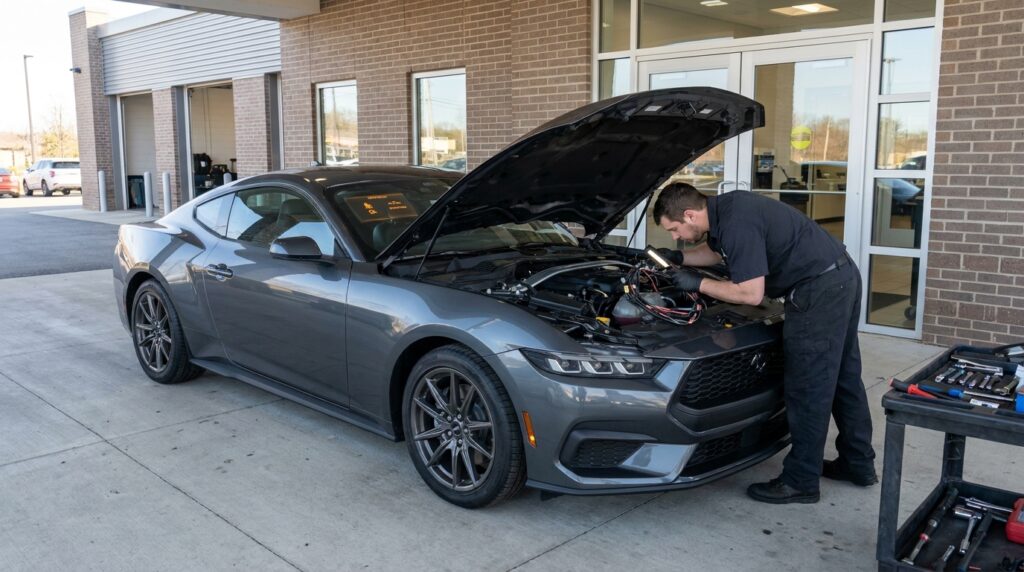
Ford Mustang owners have a significant new safety recall to watch in 2026. Ford is recalling 148,663 Mustang vehicles in the United States because an electrical wiring problem can potentially cause a loss of drive power or interfere with several important vehicle systems.
The recall covers certain 2024 through 2026 Ford Mustangs. The National Highway Traffic Safety Administration identifies the campaign as Recall 26V547, while Ford refers to it as campaign 26C40.
The problem involves ground connections in the engine-compartment wiring harness. If one of these connections fractures, the vehicle could lose drive power. Depending on the affected connection, owners may also experience problems involving headlights, the windshield washer system, air conditioning, or the engine cooling fan.
That combination makes this more than a minor convenience issue. Losing propulsion while driving can create an obvious safety concern, while losing headlights or windshield-cleaning capability may reduce visibility. An engine cooling fan failure could create additional reliability problems if it contributes to overheating.
But a recall raises another question for owners who have already experienced repeated problems: does the Ford Mustang recall mean the vehicle qualifies as a lemon?
Not automatically. A safety recall and a lemon law claim are different legal processes. However, repeated warranty-covered electrical failures, failed repair attempts, or significant time out of service may become relevant to lemon law rights depending on the owner’s state, warranty coverage, repair history, mileage, and other circumstances.
What Ford Mustang Recall 26V547 Covers
The recall applies to 148,663 model-year 2024, 2025, and 2026 Mustangs. Federal recall information indicates that the problem involves engine-compartment wiring harness ground connections that may fracture.
Electrical grounding is essential because numerous vehicle systems depend on reliable electrical connections. When a ground connection becomes unstable or breaks completely, the resulting symptoms can affect systems that may appear unrelated to one another.
For example, a driver might initially experience an intermittent electrical warning, only to later notice a headlight problem, loss of air-conditioning operation, or an engine-related issue. In more serious circumstances, the defect could contribute to a loss of drive power.
Why a Small Wiring Connection Can Create Major Problems
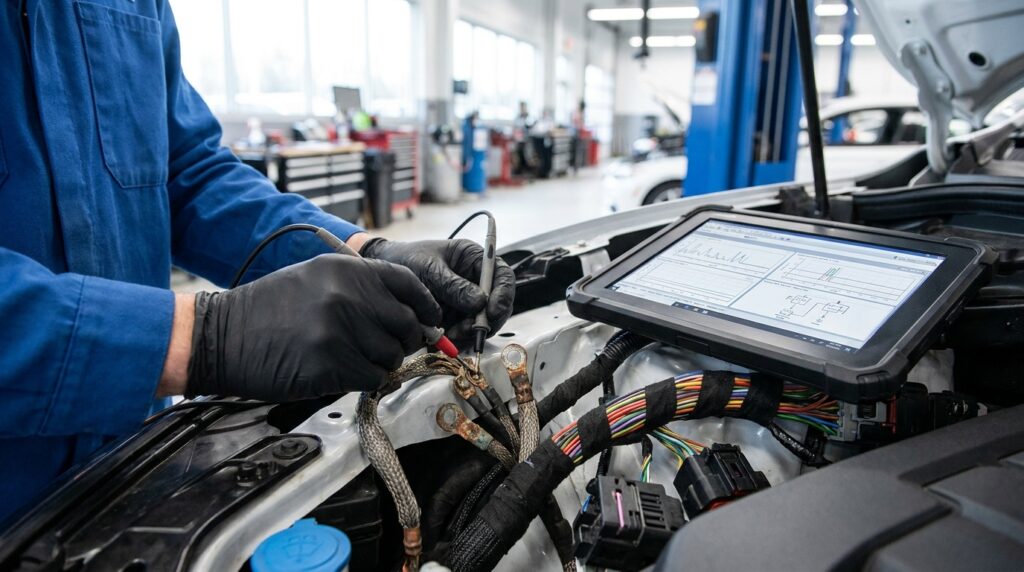
Modern vehicles depend on interconnected electrical and electronic systems. Engines, cooling systems, lighting, safety modules, sensors, infotainment equipment, and other components communicate through complex wiring networks.
A defective connection therefore does not always produce one predictable symptom. The same underlying wiring issue may appear differently depending on which circuit or component is affected.
Ford estimates that only a portion of the recalled population is expected to actually contain the defect. That is common with safety recalls. Manufacturers may recall an entire production population because they cannot determine which specific vehicles contain the problem without inspection or repair.
Owners should therefore avoid assuming that every 2024–2026 Mustang is defective. The correct first step is to check the vehicle’s VIN and determine whether the recall applies.
Loss of Drive Power Is Especially Important to Document
If a Mustang stalls, loses propulsion, enters an unexpected reduced-power condition, or becomes unable to accelerate normally, owners should document exactly what happened.
Record the mileage, date, speed, dashboard warning messages, driving conditions, and whether the engine restarted afterward. If it can be done safely, photographs or videos of warning lights may also help establish what the driver experienced.
Loss-of-power problems are particularly important because they can affect both the vehicle’s usefulness and safety. Your site’s guide to common defects that may qualify for lemon law claims explains why repeated engine and electrical failures can become significant when they substantially interfere with a vehicle’s operation and remain unresolved.
Intermittent Electrical Problems Should Still Appear on Repair Orders
One challenge with electrical defects is that they can disappear before the dealership examines the vehicle. A driver may experience a serious malfunction on the highway, but the Mustang may operate normally after being restarted or after arriving at the service department.
If that happens, do not allow the absence of an active warning light to erase the complaint from the repair record. Explain the symptoms clearly and ask that the repair order accurately describe the reported problem.
A dealership notation such as “could not duplicate” does not necessarily mean the event never occurred. Intermittent wiring, sensor, module, and software problems can be difficult to reproduce on demand.
For more detail, read Dealer Says “No Problem Found”: How to Prove Intermittent Vehicle Defects. Keeping those unsuccessful diagnostic visits in the paper trail can become important if the same defect appears again.
Does the Mustang Recall Automatically Make the Car a Lemon?
No. Being included in a recall does not automatically entitle an owner to a lemon law buyback or replacement.
A recall normally addresses a safety defect or failure to meet federal safety requirements across a defined group of vehicles. The manufacturer must provide an appropriate remedy to affected owners.
A lemon law claim focuses much more closely on the history of a particular vehicle. Relevant questions may include whether the defect is covered by an applicable manufacturer warranty, whether it substantially affects use, value, or safety, how many opportunities the manufacturer had to repair it, and how long the vehicle remained unavailable because of repairs.
This distinction is explained in greater detail in Recall vs. Lemon Law: Why a Free Repair May Not Be Enough.
One Successful Recall Repair May Resolve the Problem
For many Mustang owners, the process may be straightforward. The VIN appears in the recall population, the dealership performs the required inspection or repair, and the vehicle operates normally afterward.
In that situation, there may never be a lemon law dispute. Lemon laws generally are not designed to turn every repairable vehicle defect into a buyback claim.
The situation becomes different when a serious warranty-related problem continues despite repair opportunities. For example, an owner may have already visited the dealership several times for loss of power or electrical failures before the recall was announced. Another Mustang might receive recall work but later return with the same symptoms.
That ongoing repair history may deserve closer review.
Repeated Problems After Recall Work May Matter More
If the dealership performs the recall remedy and the same symptoms return, schedule another warranty visit and document that the failure occurred after recall work.
Do not simply tell the service adviser that the vehicle has “electrical problems.” Describe the actual symptoms. Statements such as “vehicle lost drive power while traveling approximately 50 mph” or “both headlights stopped operating while driving at night” provide much more useful documentation than vague descriptions.
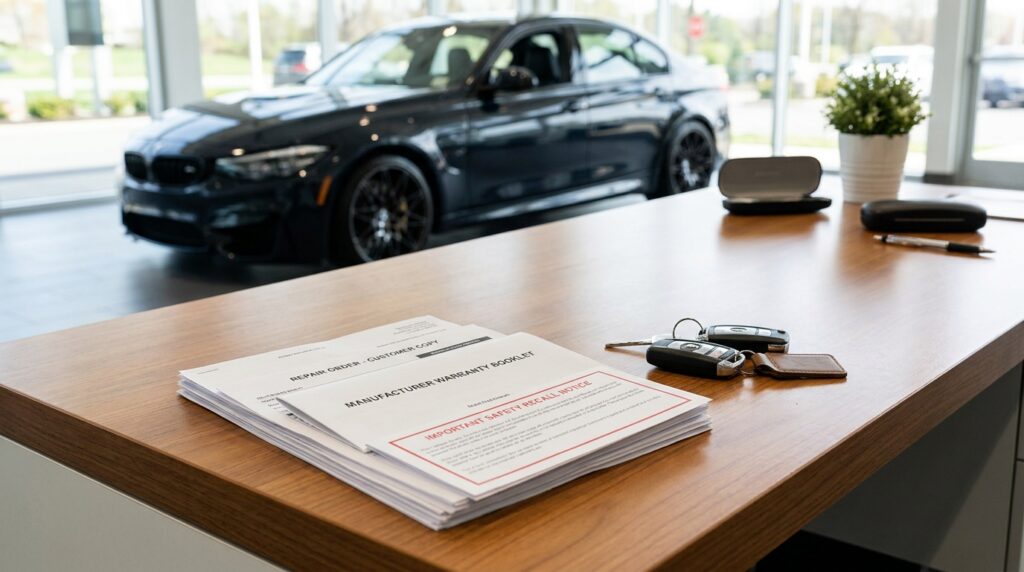
Owners should also retain the original recall notice and the invoice showing that the recall work was completed. Together, those documents establish a timeline showing what the manufacturer identified, what repair was performed, and what happened afterward.
What Mustang Owners Should Do After Receiving the Recall Notice
The most important action is to confirm whether the individual vehicle is affected. Owners can use the official NHTSA recall lookup and enter the vehicle identification number. NHTSA recommends using the VIN because it identifies recalls associated with the specific vehicle rather than relying only on make and model.
If the recall applies, contact an authorized Ford dealer and follow the manufacturer’s current repair instructions. Recall remedies are generally provided without charge to the owner.
Owners experiencing current safety symptoms should also tell the dealership what the vehicle is doing instead of scheduling the visit only as a generic recall appointment.
Build a Complete Repair Timeline Before Problems Become Hard to Reconstruct
Good documentation becomes increasingly important when a vehicle has been repaired more than once. Owners should keep every repair order, recall notice, warranty invoice, towing receipt, rental-car record, dealership email, manufacturer communication, and appointment confirmation.
Create a simple chronological record containing the date of each failure, mileage, symptoms, dealership visit, repair performed, and number of days the vehicle was unavailable.
If the Mustang experienced similar electrical symptoms before Recall 26V547 was announced, include those earlier repair orders as well. A recall can provide new information about the possible cause, but the repair history before the announcement may still be relevant.
California owners should pay particular attention to procedure because California lemon law rules changed through AB 1755 and SB 26, and some manufacturers have elected into newer procedural requirements. Your site’s current guide to California Lemon Law notice rules in 2026 explains why consumers should determine which process applies before filing a California claim.
Drivers outside California should review the law that applies in their state because lemon law requirements vary significantly across the country. The required repair opportunities, warranty periods, mileage limits, notice procedures, eligible vehicles, and filing deadlines are not identical from one jurisdiction to another.
The 2026 Mustang
The 2026 Mustang recall should therefore be viewed as both a safety issue and a documentation issue. Owners should complete the recall remedy, preserve all paperwork, and pay close attention to whether the problem actually disappears afterward.
If the repair permanently resolves the condition, that is the best outcome. But if the Mustang continues losing power, experiencing headlight failures, showing electrical warnings, overheating, or returning to the dealership for the same underlying problem, the owner may need to look beyond another routine service visit.
A recall alone does not prove that a Mustang is a lemon. A documented pattern of serious warranty-covered defects that the manufacturer cannot successfully repair is a much more important question.
Disclaimer: This article provides general educational information and is not legal advice. Lemon law rights vary by state and depend on the specific vehicle, warranty, repair history, mileage, deadlines, manufacturer procedures, and other facts. Consumers seeking advice about an individual claim should consult a qualified attorney or appropriate government consumer-protection agency.