

Motorcycle lemon law coverage is one of the easiest vehicle-warranty topics to misunderstand. Riders may assume that all motorcycles are protected just like passenger cars, or that no state includes two-wheeled vehicles at all. Both claims are too broad. State definitions and remedies can differ, and federal warranty law may provide another possible avenue for certain disputes. With new model-year bikes arriving and riding seasons changing, this is a useful time to review what a defective motorcycle owner can document before another repair appointment. This article explains recurring safety and reliability issues, state-law differences, practical evidence and why modifications should be discussed honestly instead of hidden.
Check Whether Your State Covers the Motorcycle
Start with the exact statutory definition of a covered motor vehicle. Some state laws explicitly exclude motorcycles, while others include certain motorcycles or apply different rules. The model, engine type, purchase or lease status, registration and use may matter. Do not assume a national website’s state comparison chart has every current detail. If a rider has moved or purchased across state lines, the analysis may require careful review of the transaction and governing law. The site’s general guide to understanding lemon law rights gives the basic concepts, but the state’s actual statute and a qualified adviser should control.
Identify Problems That Affect Real Use or Safety
Repeated engine stalling, fuel leaks, braking issues, unpredictable electronic throttles and loss of electrical power may be more consequential than minor cosmetic blemishes. A single reported failure does not automatically establish an entitlement to repurchase. Evidence may depend on the written warranty, seriousness, repair attempts and time out of service. Keep the complaint factual: when did the condition occur, how did it affect operation, what warning appeared and what did the authorized shop do? Riders should never continue riding a bike they reasonably believe is unsafe simply to demonstrate that a defect persists. Arrange appropriate transportation or towing instead.
Document Intermittent Riding Faults Safely
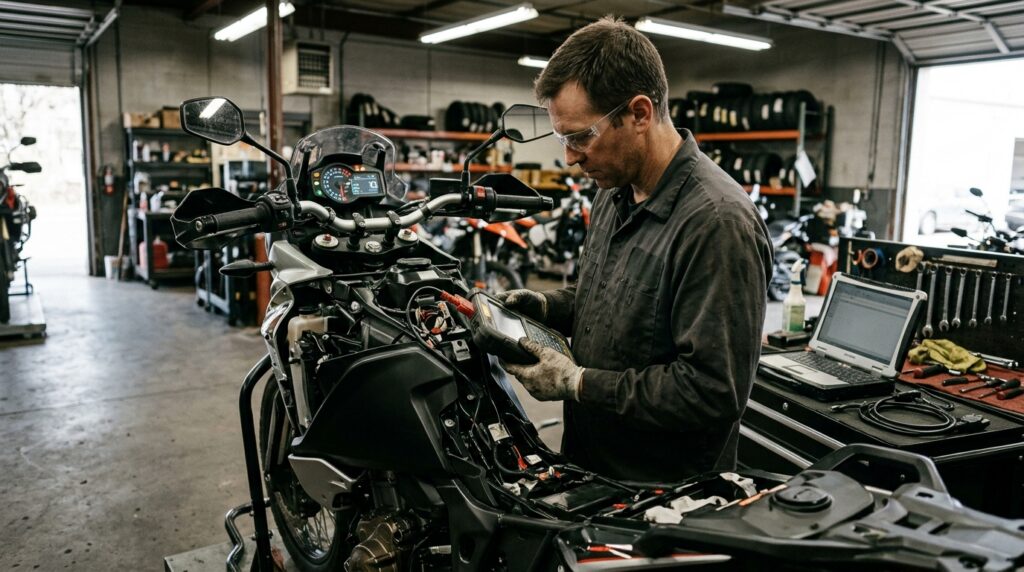
Some faults appear only after the engine warms, when turning the handlebars or under certain electrical loads. Write down conditions immediately after stopping safely. If warning codes appear while stationary, photograph them without interfering with riding. Do not mount a handheld phone or attempt to film a dangerous failure while moving. Ask the service department to reproduce the issue in a controlled professional setting. Make sure the repair order records the specific symptom, not just “customer requests inspection.” A clear history is useful even when a technician cannot recreate the problem on one short test ride.
Keep Modifications and Maintenance Transparent
Aftermarket exhausts, lighting, suspension parts or ECU software may be relevant to a dispute, but a manufacturer cannot necessarily void every unrelated warranty obligation merely because the bike has a modification. The connection between the alteration and alleged failure may become important. Preserve maintenance receipts, manufacturer service requirements and the dates of any changes. Do not secretly reverse modifications or misrepresent the bike’s history before an inspection. The FTC’s warranty guidance explains broad warranty principles; application to an individual motorcycle defect still requires the warranty and relevant law.
Understand Warranty Remedies Beyond State Lemon Laws
When a motorcycle falls outside a state’s specific lemon law, that does not mean the owner has no rights. Written warranties, implied-warranty rules, federal Magnuson-Moss protections or other consumer statutes may be relevant, depending on the facts. These remedies are not identical. A legal route that allows damages for a breached warranty is not necessarily a statutory right to a full repurchase. Ask a qualified lawyer or consumer office which theories could apply before concluding that a frustrating repair experience guarantees a buyback. Deadlines, notice requirements and available attorney fees can differ materially.
Separate Recall Work From Repeated Defects
Manufacturers may issue recalls to address defects affecting a group of motorcycles. Check the vehicle identification number through the relevant manufacturer and safety regulator where applicable. A recall repair should be completed promptly according to official instructions. However, a recall announcement is not by itself proof that a specific rider qualifies for a lemon law remedy, and a repaired recall may resolve the issue. If the same symptom returns, document that recurrence carefully. Save the recall notice, completion record and any subsequent service paperwork as separate pieces of the timeline.
Record Days Unavailable Accurately
Riders sometimes say a motorcycle was in the shop for months when the written records show several visits with gaps between them. Create a dated log of actual drop-off and pick-up times, delayed parts and periods when riding was discouraged by the repairer. Ask for written confirmation when a shop has ordered a part or cannot perform work. Whether a day counts toward a legal threshold depends on the jurisdiction and specific circumstances. Avoid assuming a widely repeated “30-day rule” exists in exactly the same form for every motorcycle or every state.
Prepare for a Repair Dispute Without Escalating Risk
Start by contacting the dealer or manufacturer’s customer-care channel with a concise chronology and copies of the relevant work orders. Explain what outcome you seek: another properly documented repair, inspection by a specialist or information about dispute procedures. Preserve emails and case numbers. If the situation involves a safety hazard, avoid riding until a qualified professional says it is safe. Be cautious about public posts making accusations that are not established facts. A good record is more useful than an emotional account that mixes personal frustration with assumptions about what caused the fault.
Choose the Next Step Based on the Actual Rules

If repairs have failed, ask a state consumer-protection office or qualified warranty lawyer to review the governing statute, warranty and evidence. Find out whether a manufacturer dispute programme is required, available or optional in your case. Ask how the bike’s age, mileage, purchase price and business use could affect coverage. Do not sign an agreement labelled full and final settlement without understanding what rights it releases. Motorcycle lemon law is a highly specific question, but the path to a clearer answer begins with the same habit used in effective repairs: accurate diagnosis and documentation.
Before choosing a repair facility, check whether the warranty requires an authorized service network and how emergency repairs are handled. An independent mechanic may offer excellent service, but a statutory repair history may turn on specific notice or manufacturer-opportunity requirements. Ask for those details rather than assuming any shop visit counts. If you had the motorcycle transported to a service center, preserve towing records and messages explaining why it was not ridden. These supporting facts may help an adviser reconstruct the seriousness of the problem without exaggeration.
If the motorcycle is still under finance, keep those statements in your records as well. A warranty dispute and the obligation to repay a lender are different matters. Do not stop making payments solely because a manufacturer has not resolved a defect. If a potential refund or replacement is discussed, ask how any outstanding loan and the title will be handled. A state-specific adviser can help you avoid signing a final agreement that leaves a financial obligation unresolved.
Frequently asked questions
Are motorcycles protected in every state? No. States define covered vehicles differently. Some exclude motorcycles, while other remedies or warranty laws may still apply.
Is a modification automatic grounds to reject all claims? Not always. Facts about the specific failure and the link to modifications may matter. Preserve records and seek competent advice.
Do repeated visits guarantee a replacement? No. Eligibility also depends on the defect, warranty coverage, timing, statutory requirements and other circumstances.
Should I keep riding to prove the defect exists? No. Do not put yourself or others at risk. Document symptoms safely and have a qualified repair professional evaluate the motorcycle.
Motorcycle lemon law questions deserve state-specific answers, not slogans. Verify the governing rules, preserve every repair record and be candid about maintenance or modifications. If a serious safety fault keeps returning, prioritize safe handling and professional review. The outcome may be a successful repair, a negotiated solution or a qualifying legal remedy, but those possibilities must be evaluated against the actual evidence.
General educational information, not legal advice. Coverage, rights and deadlines depend on the state, vehicle, transaction and warranty.