
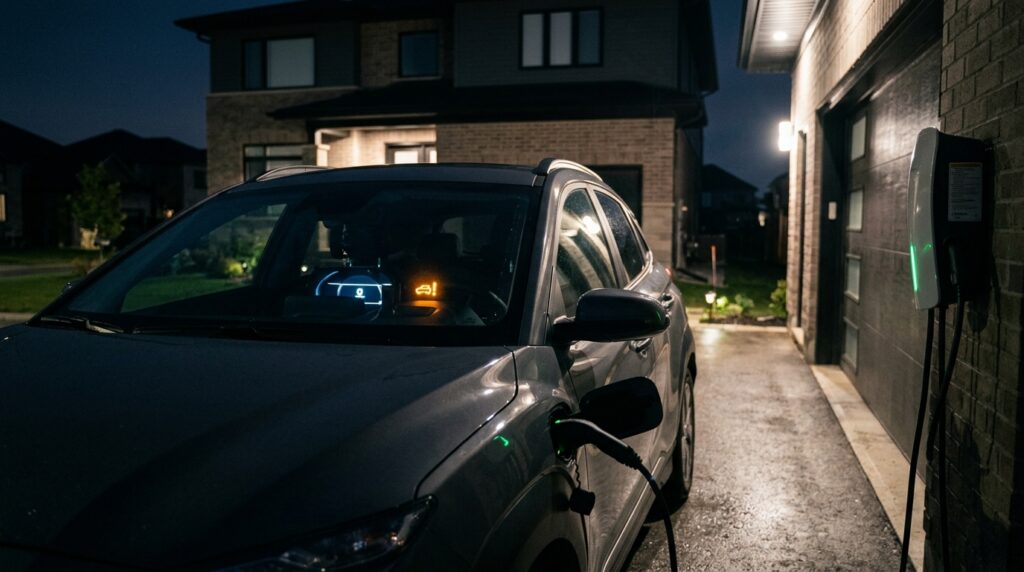
Electric vehicles are supposed to make daily driving easier. Plug in at home, wake up with enough range, and avoid the gas station. But when an EV will not charge properly, stops charging unexpectedly, charges too slowly, overheats, displays battery warnings, or repeatedly fails after software updates, the convenience disappears fast.
EV charging failures can create serious problems for owners because charging is not optional. If a gasoline vehicle has a fuel system issue, the driver cannot use the car reliably. The same is true for an electric vehicle with recurring charging defects. A car that cannot accept, hold, or manage a charge may become unreliable for commuting, family use, work, travel, and emergencies.
Not every charging issue is a lemon law case. A bad public charger, a damaged cable, or a one-time user error usually will not be enough. But when the problem comes from the vehicle itself and continues after repeated repair attempts, the owner may need to review their lemon law options. In many states, lemon law claims focus on defects that substantially impair the vehicle’s use, value, or safety while the vehicle is still covered by warranty.
This article explains when EV charging failures may become a lemon law issue, what owners should document, and why software updates do not always end the problem. This is general information only and should not be treated as legal advice.
Why EV Charging Failures Are Serious Vehicle Defects
Charging problems are different from many ordinary vehicle complaints because they directly affect whether the EV can be used. A driver may tolerate a small interior rattle or a minor screen lag, but a vehicle that cannot charge consistently creates a much bigger issue. Without dependable charging, the owner cannot trust the car for normal transportation.
Common EV charging complaints include failure to start charging, charging sessions that stop early, repeated charging error messages, reduced charging speed, overheating warnings, battery management system faults, charging port defects, onboard charger failure, high-voltage battery warnings, and software issues after an update. Some owners may also experience range loss connected to charging restrictions or battery-protection limits.
Charging Defects Can Affect Use, Value, and Safety
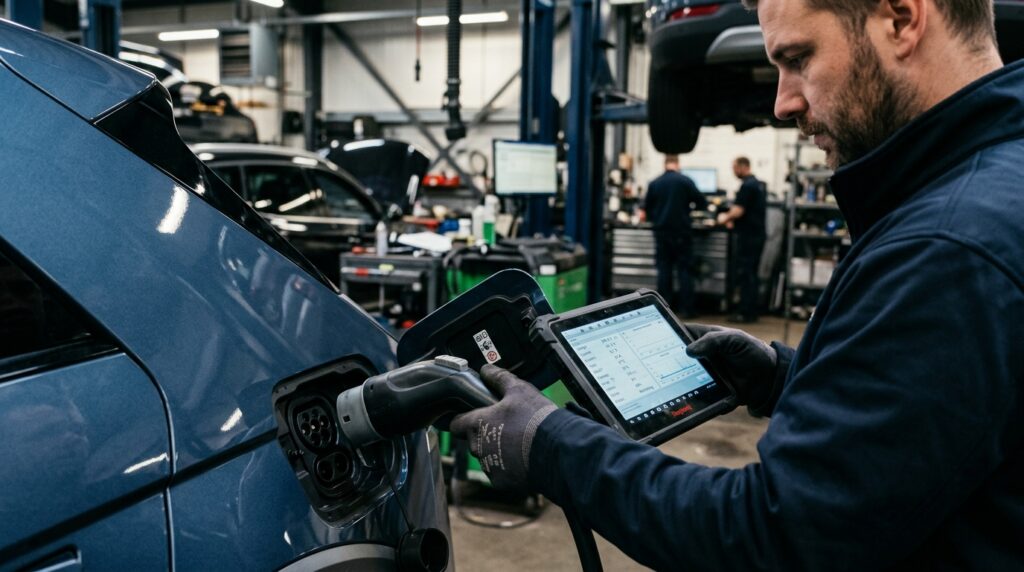
For lemon law purposes, the key question is usually whether the defect substantially affects the vehicle’s use, value, or safety. A recurring charging failure can affect all three. It affects use because the vehicle may not be ready when needed. It affects value because a used EV with charging problems may be harder to sell or trade in. ay affect safety if the defect involves high-voltage battery warnings, overheating, fire-risk notices, or sudden power limitations.
Drivers should not describe these issues vaguely. Instead of saying, “The car does not charge right,” write down the exact symptom. For example: “Vehicle stopped charging at 42%,” “charging port would not recognize the cable,” “dashboard displayed high-voltage battery warning,” “fast charging unavailable after software update,” or “vehicle limited charging after recall repair.” Specific descriptions make repair records stronger.
A bad charger is different from a bad vehicle
Before assuming the vehicle is defective, EV owners should separate charger problems from vehicle problems. A public charging station may be broken. A home charger may have an electrical issue. A charging cable may be damaged. Those problems may not support a vehicle lemon law claim because the defect is not necessarily in the EV itself.
The stronger concern appears when the same vehicle fails on multiple chargers, at different locations, or with confirmed working equipment. If the EV fails at home, fails at a dealership charger, and fails again at a public fast charger, that pattern may point toward the vehicle rather than the charging station. Keep notes showing where the failure happened and what charger type was used.
Charging limits after recalls still matter
Some EV recalls and service campaigns use software updates to limit battery charging while a manufacturer develops a permanent repair. That may be necessary for safety, but it can still affect the owner’s daily use. If your vehicle can no longer charge beyond a certain percentage, loses practical range, or remains under a temporary charging restriction for a long period, document the impact carefully.
A recall repair is important, but it does not always end a lemon law concern. If the vehicle remains restricted, unsafe, unreliable, or repeatedly returns to the dealership for the same charging or battery issue, the repair timeline may still matter. For more detail, read Recall vs. Lemon Law: Why a Free Repair May Not Be Enough.
Software Updates Can Hide or Create EV Charging Problems
Modern EVs depend heavily on software. Charging behavior may be controlled by battery management software, onboard charger programming, thermal management logic, charging-port communication, and manufacturer safety limits. That means a charging defect may not involve one simple broken part. It may involve the way the vehicle communicates with the charger or protects the battery.
This can make repairs frustrating. A dealership may install a software update and say the problem is fixed. The car may charge normally for a few days, then fail again. Another update may change the charging speed, reduce maximum charge level, or disable fast charging. Owners should track each update and ask the dealership to write down what the update was supposed to fix.
Your site’s article on over-the-air updates and software defects is a helpful related resource because many EV charging complaints now involve software patches, remote updates, and electronic diagnostics instead of traditional mechanical repairs.
Do not let “update completed” end the repair record
A repair order that only says “software update completed” may not tell the full story. Ask the dealership to include the original charging complaint, the mileage, any diagnostic codes, the software action performed, and whether the charging issue was verified after the update. If the defect returns, bring the vehicle back and make sure the next repair order states that the same problem continued after the previous update.
This matters because repeated software updates may show that the manufacturer is still trying to fix the same issue. If the vehicle keeps failing despite those updates, the records may support the argument that the defect was not repaired within a reasonable number of attempts.
How to Build a Strong EV Charging Lemon Law Timeline
EV charging cases often depend on good records. The manufacturer may argue that the charger was the problem, the driver used the wrong equipment, the defect was corrected by software, or the issue could not be duplicated. Your documentation should answer those arguments before they become obstacles.
Start a simple charging log. Record the date, mileage, charger location, charger type, battery percentage when charging started, battery percentage when charging failed, dashboard warning messages, weather conditions, and whether the vehicle was taken to the dealership. If safe, take photos or videos of the warning message, charging screen, or failed charging session.
What Records EV Owners Should Save

Save every repair order, even if the dealership says it could not duplicate the problem. A “no problem found” record can still prove that you reported the charging issue. Keep warranty documents, purchase or lease agreements, recall notices, software update records, home charger installation records, charging app screenshots, towing receipts, rental car receipts, and written messages with the dealer or manufacturer.
If the defect involves battery warnings, overheating, smoke, burning smells, or safety-related alerts, take it seriously. NHTSA’s electric and hybrid vehicle safety guidance explains that high-voltage batteries and related components can create hazards, and owners should contact emergency services during emergencies and their dealer in non-emergency situations involving EV battery concerns. For recall checks, owners can also use the NHTSA recall lookup tool.
For broader claim preparation, review How to File a Lemon Law Claim. If your EV is repeatedly stuck at the dealership waiting for a battery module, charging-port part, onboard charger, or manufacturer engineering review, also read The 30-Day Rule and Global Supply Chain Backlogs.
Recurring charging failure is the warning sign
The strongest warning sign is repetition. One failed charge may be inconvenient. Multiple failures after dealership repairs are different. If the same issue keeps returning, the EV spends long periods out of service, or the manufacturer keeps applying temporary software fixes, the owner should not ignore the pattern.
EVs are different from gasoline vehicles, but lemon law principles still focus on the same basic question: did the manufacturer fix the defect within a reasonable opportunity? If the charging system, battery, or software continues to fail under warranty, the owner may have a valid reason to explore a refund, replacement, or other remedy depending on state law.
Charging is the foundation of EV ownership. When it works, the car fits smoothly into daily life. When it fails repeatedly, the vehicle can become unreliable, stressful, and difficult to trust. Document every failure, report the issue clearly, save every repair order, check for recalls, and pay attention to how long the vehicle is unavailable. A recurring EV charging problem may not look like an old engine failure, but it can still turn a modern electric vehicle into a lemon.