

A manufacturer’s written warranty generally defines a period or mileage limit during which covered repairs are available.
However, the date a vehicle first develops a defect, when the owner reports it, and what happens during repair attempts can become important in later warranty or lemon law disputes.
Warranty expiration does not automatically settle every question involving a previously reported defect.
Nevertheless, owners should act promptly, follow the manufacturer’s procedures, and preserve evidence before important deadlines pass.
This guide explains how to document a problem, communicate with the manufacturer, and evaluate possible next steps.
Car Defect Before Warranty Expires: Why Timing Matters
Most factory warranties have limits based on time, mileage, or both.
Different parts of the vehicle may also have different coverage periods.
For example, a basic limited warranty may expire earlier than a separately specified powertrain warranty.
Understanding Warranty Coverage and the First Repair Visit
Owners should begin by identifying the specific warranty potentially covering the defective component.
The purchase paperwork and manufacturer warranty booklet are useful starting points.
How Time and Mileage Limits Affect Coverage
A manufacturer’s warranty may state that coverage ends after a specified number of years or miles, whichever comes first.
That means a vehicle can exceed a mileage limit before reaching the corresponding time limit.
Conversely, a low-mileage vehicle may lose coverage when the specified number of years has elapsed.
However, different components can have different coverage terms.
For instance, certain emissions-related components may have additional protections under applicable federal or state regulations.
Do not assume every electrical or mechanical part shares the same expiration date.
Vehicle ownership changes can also affect how remaining warranty coverage is administered.
Before scheduling repairs, review the relevant warranty terms and any transfer conditions.
The Federal Trade Commission’s warranty guide explains why reading the contract matters.
Keep a digital copy of the warranty booklet alongside the purchase or lease agreement.
Why a Written Repair Order Is Essential
If a problem appears before coverage expires, schedule a warranty inspection promptly.
Explain the symptoms to the service adviser and request that the repair order describe them accurately.
Include the approximate date, mileage, warning messages, and circumstances of the malfunction.
For example, a vehicle may hesitate during acceleration or display an intermittent system warning.
Those details are more useful than a vague statement that the car drives badly.
Make sure the repair order reflects the concern even if the technician cannot reproduce it.
A record showing that the owner reported the defect within the warranty period may become important in a later dispute.
However, documentation alone does not establish that the problem is covered or guarantee a legal remedy.
The defect and repair history must still satisfy the applicable warranty and legal requirements.
Ask for a copy of the completed service invoice after each visit.
What If the Dealership Cannot Fix the Defect?
Some mechanical problems are difficult to diagnose because they occur intermittently.
Others require replacement components that are temporarily unavailable.
These situations can become more concerning as warranty expiration approaches.
Repeat Visits and Problems That Cannot Be Reproduced
Suppose a vehicle repeatedly loses power but the issue does not occur during the dealership’s diagnostic test.
The service department may return the vehicle without replacing a component.
That does not mean the owner should stop documenting the problem.
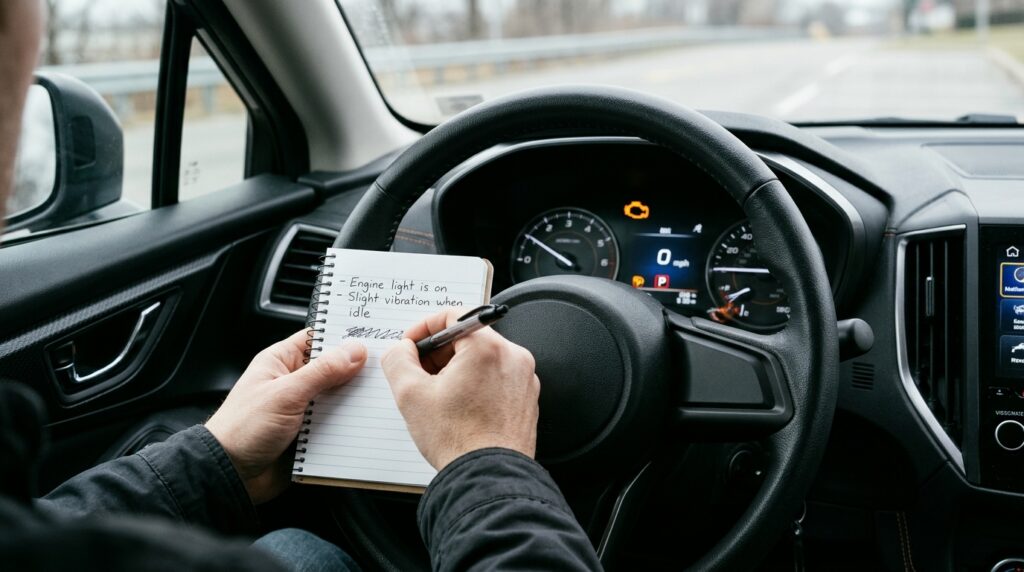
Keep a symptom journal and note conditions such as temperature, speed, weather, or warning messages.
Photographs or videos may help when they can be recorded safely.
Never attempt to film a malfunction while driving.
For recurring issues, submit new written complaints rather than relying only on earlier verbal conversations.
Each repair order should accurately reflect what was reported and what the technician did.
Read our lemon law repair and documentation articles for related guidance.
A consistent record may help show whether the same defect continued despite repair attempts.
Parts Backorders and Repairs After Expiration
A manufacturer may identify a covered defect while a replacement part is unavailable.
The resulting delay can extend beyond the ordinary warranty end date.
However, whether the manufacturer must complete the repair without charge depends on the specific warranty, reporting history, and applicable law.
Owners should not assume that a pending repair will automatically be canceled when the warranty expires.
Likewise, they should not assume that every repair scheduled before expiration remains covered indefinitely.
Request written confirmation of the diagnosis, parts order, and warranty authorization.
If the dealership says coverage has ended, ask it to explain the decision and identify the relevant warranty provision.
Escalate unresolved questions through the manufacturer’s official customer assistance process.
Retain all correspondence.
How to Preserve Lemon Law Rights Before and After Expiration
A lemon law claim is not simply another name for an ordinary warranty repair.
State lemon laws establish their own eligibility requirements, remedies, and filing procedures.
Documents, Deadlines, and Practical Next Steps
Owners should identify which state’s law potentially applies and determine whether the manufacturer’s warranty covered the defect when it arose.
Do not rely solely on generic statements that every warranty claim disappears on the expiration date.
Gather the purchase and warranty documents.
Keep the sales or lease agreement, warranty booklet, financing information, and vehicle identification number.
Record the original delivery date and current mileage.
These facts may be relevant to determining applicable coverage and deadlines.
If the vehicle was purchased used, additional legal questions may arise.
California’s treatment of used vehicles and remaining original factory warranties was affected by the Supreme Court’s decision in Rodriguez v. FCA US.
Consequently, buyers should not assume every used car with factory warranty time remaining qualifies as a new vehicle for manufacturer repurchase purposes.
Keep every repair document.
Collect repair orders, diagnostic results, dealer messages, and records of unsuccessful visits.
Maintain documents showing when the vehicle entered and left the service department.
Repair duration may matter alongside the number of attempts.
However, not every service visit counts toward every legal test.
Separate routine maintenance, collision repairs, and unrelated service from warranty defect repairs.
Notify the manufacturer where required.
Some warranty and lemon law procedures require communication with the manufacturer rather than only the selling dealership.
California’s AB 1755 and SB 26 framework also introduces additional procedures for manufacturers that elected to follow the newer system.
The applicable requirements depend on the manufacturer and the type of claim.
Refer to the California Department of Consumer Affairs’ manufacturer procedure guide.
Because filing deadlines can be strict, avoid waiting for another unsuccessful repair without first understanding the available legal options.

Understand the difference between repair coverage and legal remedies.
A warranty addresses covered repair obligations.
Lemon law remedies may involve repurchase or replacement when the legal requirements are met.
These are related but separate questions.
The fact that a vehicle’s written warranty expired does not necessarily answer whether a prior failure to repair a qualifying defect created a potential claim.
However, that does not mean a vehicle qualifies merely because an owner remembers an earlier problem.
Repair documentation, notice, deadlines, and the nature of the defect matter.
For California-specific guidance, review the state’s lemon law FAQ.
Consider manufacturer goodwill assistance.
Some manufacturers voluntarily offer financial assistance for repairs after the stated warranty ends.
This may be described as goodwill coverage or a customer accommodation.
However, it is not automatically a substitute for a legal warranty remedy.
The manufacturer may offer to pay part of a repair without admitting that the entire claim is covered.
Before accepting an arrangement, ask whether any release, waiver, or additional condition applies.
Do not confuse a courtesy discount with resolution of every possible legal issue.
Check whether a separate service contract applies.
A vehicle owner may have purchased a service contract extending certain repair benefits beyond the original warranty.
Such contracts often contain exclusions, claim procedures, and payment conditions.
However, a service contract is not necessarily equivalent to a manufacturer’s original warranty under lemon law.
Read the agreement carefully and identify the organization responsible for administering claims.
Ask which repairs are covered and whether preauthorization is required.
When should an attorney review the situation?
Consider qualified legal advice when the defect substantially affects vehicle use, value, or safety and the manufacturer has not resolved it.
Legal review is especially important when deadlines are approaching or a settlement is being offered.
Bring the complete repair history rather than only a summary of the final visit.
That allows the adviser to assess the chronology and relevant legal requirements.
Do not delay obtaining information merely because the vehicle is awaiting another appointment.
Frequently asked questions
What if I reported the problem before the warranty expired?
The timing may be relevant. Preserve the repair order and review the warranty and applicable law.
What if the dealership says it cannot reproduce the problem?
Continue documenting symptoms and request accurate written service records.
Does warranty expiration automatically end lemon law rights?
Not necessarily. Eligibility depends on the warranty history, defect, legal requirements, and filing deadlines.
Will a manufacturer pay for repairs after expiration?
That depends on the circumstances, warranty obligations, and any authorized goodwill or service contract coverage.
Final thoughts
A car defect discovered before the warranty expires deserves prompt attention and careful documentation.
Make the repair complaint in writing, preserve service records, and review the applicable manufacturer procedures.
If the problem remains unresolved, investigate potential warranty and lemon law options before legal deadlines pass.
Legal disclaimer: This article provides general consumer information and is not legal advice for any individual vehicle claim.