
A driver with a defective vehicle may hear that a manufacturer is considering a buyback and immediately wonder whether the monthly loan payment can stop. The pressure is real when a car spends weeks at a dealership, but a pending warranty claim and an active loan remain separate obligations.
This lemon law buyback car loan payoff guide explains what financed-vehicle owners should check in 2026: who gets paid, how a payoff amount differs from a refund, what to do about negative equity, and why optional GAP coverage is not a general solution to a defective car. The rules for manufacturer repurchases vary by state. This is practical information for organizing your finances, not a promise of a particular settlement amount.
One point deserves attention from the start: until your lender confirms the account has been paid or you have an authorized payment arrangement, continue meeting the loan’s contractual obligations. A claim against an automaker does not automatically suspend a separate finance agreement. If payments have become unaffordable, contact the lender or servicer promptly rather than assuming the manufacturer will resolve the account immediately.
How a Lemon Law Buyback Affects an Outstanding Car Loan
A manufacturer repurchase can be structured differently depending on state law and whether the parties reach an informal settlement, arbitrate, or obtain a legal remedy. In a financed transaction, a lienholder may have to be paid before title can transfer and the owner receives whatever remaining funds are due. That requires accurate figures from the loan servicer, not just an estimate shown on the last monthly statement.
Why the Loan Payoff Is Not the Same as the Refund
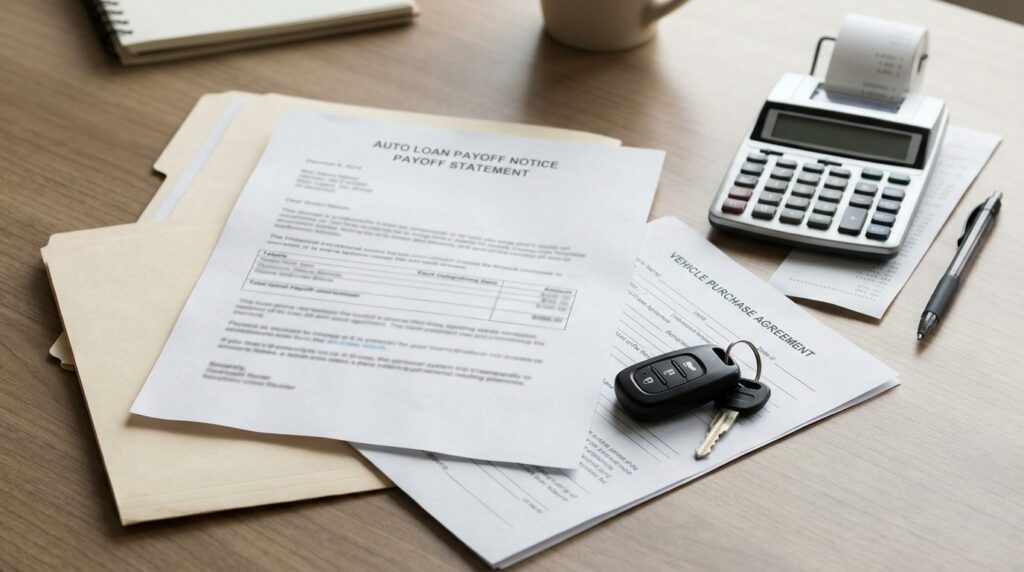
A loan payoff quote is what the lender says must be paid to satisfy the outstanding financing as of a specified date. It may account for principal, accrued interest, and other permitted charges. A lemon law repurchase calculation instead follows applicable law or the settlement terms. Depending on jurisdiction and circumstances, that calculation may address vehicle payments, finance charges, taxes, fees, allowed offsets for use, and other items. The two numbers do not necessarily match.
For example, a consumer might have made a substantial down payment and several monthly installments while also carrying an outstanding balance. The manufacturer and lienholder may receive or distribute different payments as part of a repurchase. Do not assume that a listed “refund” will arrive entirely as a check payable to you. Ask for a written breakdown showing the lender payoff, consumer payment, any deductions, and the expected title-transfer process.
Request a Written, Date-Specific Payoff Statement
Contact your lender or loan servicer and request a payoff quote that states its expiration date. Some payoff quotes are valid only through a certain day because interest can continue accruing. Confirm the account number, payee instructions, and any processing requirements. Ask the manufacturer or its buyback administrator how it will obtain an updated quote if the transfer date changes.
Keep paying according to your finance contract until the servicer confirms that an arrangement or completed payoff changes your obligations. The Consumer Financial Protection Bureau (CFPB) recommends contacting the lender as soon as you expect difficulty making payments and getting any negotiated terms in writing.
Track Payments Made During the Claim
Keep bank statements or lender receipts for payments made while the vehicle is being repaired or the buyback is pending. These records may be relevant to a repurchase calculation or settlement discussion, depending on governing rules. Ask who will address any payment that posts after a payoff quote was prepared and whether the amount will change the final reconciliation. Do not cancel automatic payments before confirming that the account has actually been satisfied.
Preserve the original retail installment contract, sales invoice, warranty, registration, proof of down payment, and repair history. Our lemon law claim preparation guide explains why a complete record helps when a defect and its repair history are disputed. Loan paperwork belongs in the same file, but should remain clearly separated from technical service records.
What If You Owe More Than the Vehicle Is Worth?
Negative equity means a vehicle’s loan balance exceeds its current market value. It is common to discuss negative equity during trade-ins, but a lemon law buyback is not simply an ordinary trade-in. A statutory repurchase may use a legally defined calculation rather than today’s market price. A voluntary settlement can have different terms. Therefore, do not assume either that negative equity eliminates your rights or that every dollar of your existing loan will automatically be covered.
The CFPB warns that rolling unpaid debt from an earlier vehicle into a new car loan increases the amount being financed and makes the replacement loan more expensive. If you carried debt from a trade-in into the defective vehicle’s loan, identify that amount in your contract. A lawyer or settlement reviewer may need to determine how such rolled-over balances are treated under applicable law and any proposed agreement.
One useful comparison is to prepare three separate figures: current lender payoff, the proposed manufacturer repurchase amount, and any out-of-pocket costs you believe the governing law permits. Label them clearly. An accurate side-by-side comparison helps you ask better questions without mistaking a marketing promise of a “full refund” for a verified settlement calculation.
Practical Steps Before Accepting a Repurchase Offer
While consumers often want a quick answer, the final handover is the stage when administrative mistakes can become difficult to fix. A buyback typically involves documents from the manufacturer, the lender, and the owner. Review each separately, ask about deadlines, and confirm that funds will be sent to the correct parties. The car’s possession and title status may also matter for legal reasons.
Understand GAP Insurance, Add-Ons, and Final Accounting
GAP coverage is often misunderstood during warranty disputes. According to the CFPB’s explanation of GAP insurance, it is an optional product generally intended to address the difference between loan debt and insurance proceeds if a vehicle is stolen or declared a total loss. It is not automatically a fund that pays off debt whenever a manufacturer agrees to a lemon law repurchase.
Likewise, an extended service contract, prepaid maintenance plan, tire protection package, or other financed add-on may have its own cancellation and refund terms. Review those documents rather than assuming everything is included in the manufacturer payment. Unused products may qualify for refunds under applicable terms. Ask who must initiate cancellation and whether any refund goes to the lender or directly to you.
Check the Repurchase Statement Line by Line
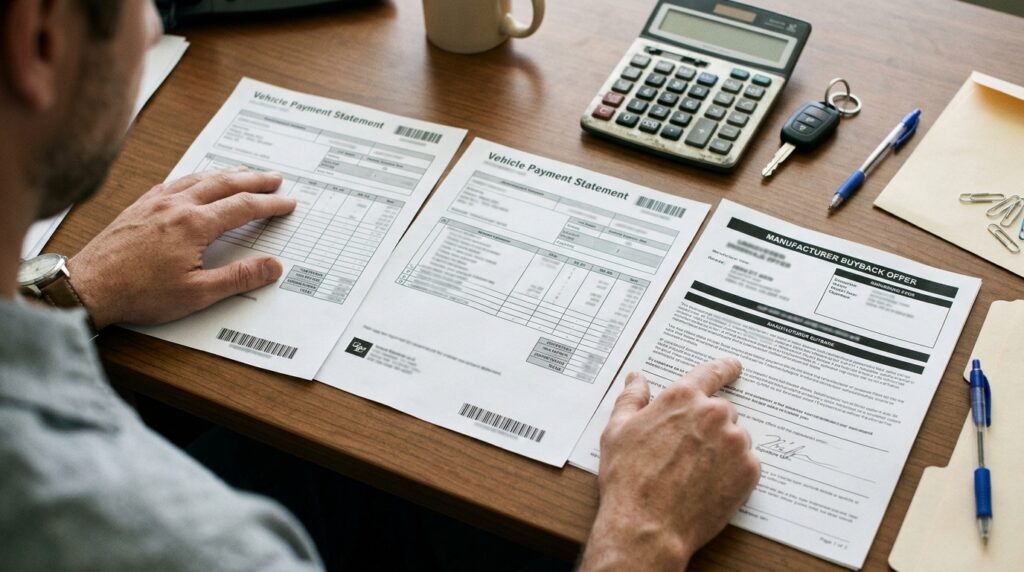
Before signing, ask for an itemized written accounting. It should show the calculation used, any mileage or use deduction, the loan payoff arrangement, consumer payment, taxes or fees addressed, and the timeline for surrendering the vehicle. If the proposed amount appears inconsistent with your receipts, raise the discrepancy before handover. State law may control which items are recoverable and which deductions are permitted.
California owners should pay particular attention to the process applicable to their manufacturer. The state’s Department of Consumer Affairs explains that manufacturers electing certain newer procedures have specific notice, payment, and possession requirements. Our California notice-rules overview provides related background. Other states may have different handover obligations.
Get Confirmation That the Loan Is Closed
After the buyback is completed, verify the lender received the correct payment. Request written confirmation that the account was paid in full or otherwise resolved under the agreement. Check the final statement for remaining interest, fees, or unapplied amounts. If a payment posts after payoff, ask how it will be refunded or credited. Keep the closing statement and vehicle-surrender receipt indefinitely with your important vehicle records.
Review the treatment of any trade-in balance, optional products, and title paperwork before taking delivery of a replacement vehicle. If you choose another financed car, compare its interest rate, monthly payment, total borrowing cost, and any new add-ons independently of the original buyback. A successful resolution should not pressure you into an unfavorable new financing arrangement.
Finally, remember that “manufacturer buyback” can also refer to a vehicle history label after the automaker repurchases and later resells a car. That is a separate issue from paying off the original owner’s loan. Our article on lemon law buyback titles explains what future used-car shoppers should investigate before buying a previously repurchased vehicle.
The most useful strategy is to separate the legal question from the financing question. Keep pursuing repairs and warranty remedies through the proper channels, but also communicate with your lender, obtain current payoff information, and demand a written settlement breakdown. The manufacturer may owe a remedy under state law, yet you still need to verify that the loan, title, and related add-ons are handled correctly. That paperwork is what turns an announced buyback into a completed financial resolution.
Disclaimer: This article is for general educational purposes and is not legal or financial advice. State lemon laws, loan agreements, settlement terms, and product-refund rules differ. Consult a qualified attorney or financial professional about individual circumstances.