
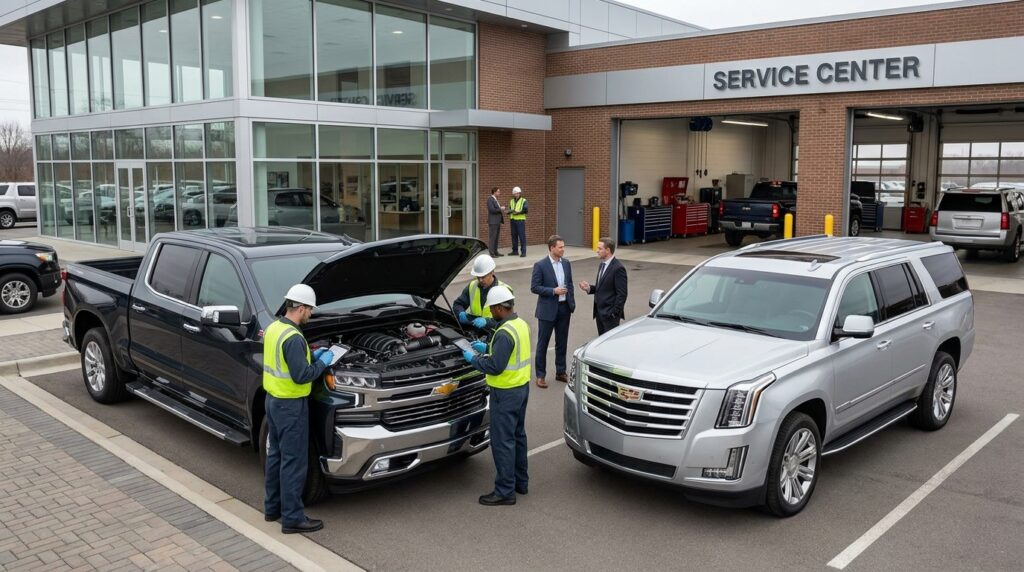
Owners of certain Chevrolet, GMC, and Cadillac trucks and SUVs have another major engine-safety development to watch in 2026. The National Highway Traffic Safety Administration has expanded its investigation into nearly one million General Motors vehicles equipped with the 6.2-liter L87 V8 engine after continued reports of engine failure and sudden loss of propulsion.
The investigation involves popular vehicles including certain Chevrolet Silverado 1500, Tahoe and Suburban models, GMC Sierra 1500 and Yukon models, and Cadillac Escalade vehicles. The expanded review includes model years extending through 2026 and follows an earlier GM safety recall involving hundreds of thousands of vehicles.
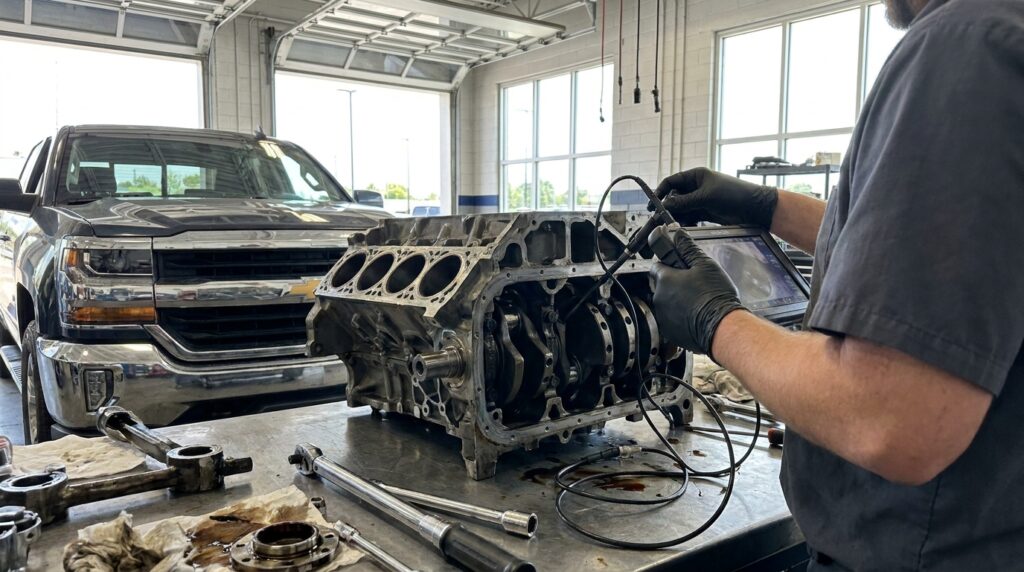
The concern is serious because an internal engine failure can happen while a vehicle is being driven. Earlier federal documents described failures involving connecting-rod bearings, crankshaft components, engine seizure, and loss of propulsion. Some complaints indicated that drivers received little or no warning before the engine failed.
For an owner who has already experienced repeated knocking, stalling, loss of power, engine replacement, oil-pressure warnings, or multiple dealership visits, the investigation raises another question: could an affected GM truck or SUV also qualify for lemon law protection?
An NHTSA investigation or recall does not automatically make an individual vehicle a lemon. Lemon law claims are generally evaluated using the specific vehicle’s warranty status, repair history, severity of the defect, number of repair opportunities, time out of service, and applicable state law. But repeated engine failure or continued problems after recall work can make detailed documentation especially important.
Why NHTSA Expanded the GM L87 Engine Investigation
The current investigation builds on a problem that federal regulators and GM have been examining for some time. NHTSA initially investigated reports involving sudden engine failures in vehicles equipped with GM’s L87 6.2-liter V8.
GM subsequently announced a major safety recall in 2025 covering roughly 600,000 vehicles from the 2021 through 2024 model years. GM’s investigation identified manufacturing and supplier-quality problems that could damage connecting-rod bearings and other internal engine components.
Federal recall documentation identified two important manufacturing concerns: sediment contamination involving connecting rods and crankshaft oil galleries, and crankshafts that may have been produced with dimensions or surface finishes outside specification. Either condition could contribute to bearing damage and eventually lead to engine failure or loss of propulsion.
The story did not end with that recall. By August 2026, NHTSA had escalated its review after receiving additional information about failures, including complaints involving vehicles that had already gone through recall-related work and vehicles that were not included in the original recall population.
Why Sudden L87 Engine Failure Creates a Serious Safety Concern
A vehicle engine that begins making noise during a driveway start is inconvenient. An engine that seizes or loses propulsion at highway speed creates a much different risk.
Loss of motive power can leave a driver unable to maintain speed while merging, crossing an intersection, climbing a grade, or traveling in fast-moving traffic. Even when steering and braking remain available, an unexpected loss of acceleration can reduce the driver’s ability to respond to surrounding vehicles.
NHTSA’s earlier investigation documents described complaints involving bearing failure that could result in engine seizure or, in some cases, a connecting rod breaching the engine block. Federal documents also noted reports in which owners described little or no warning before the failure.
Knocking, Oil Warnings and Power Loss Should Be Documented Immediately
Owners experiencing unusual engine symptoms should document them carefully. Relevant symptoms may include engine knocking, ticking or metallic noises, low-oil-pressure warnings, check-engine lights, shaking, hesitation, stalling, reduced power, difficulty restarting, smoke, oil leaks, or complete loss of propulsion.
Write down the date, mileage, driving speed, warning messages, weather conditions, and what happened immediately before and after the failure. If warning lights or unusual sounds can be safely photographed or recorded, that evidence may help explain an intermittent problem to the dealership.
Owners should also make sure the dealership writes the actual complaint on the repair order. “Customer requests engine check” provides less useful information than “customer states engine began knocking and vehicle lost power while driving approximately 60 mph.”
Our guide to common defects that may qualify for lemon law claims explains why recurring engine stalling, loss of power, overheating, unusual engine noises, and other serious mechanical defects deserve careful documentation when they continue after repair attempts.
An Investigation Is Not the Same as a New Recall
Owners should understand an important distinction. NHTSA expanding an engineering investigation does not necessarily mean every vehicle being studied has been recalled.
An investigation allows federal safety regulators to examine complaints, warranty information, field reports, technical data, crash information, manufacturer records, and other evidence. NHTSA can then determine whether a broader safety defect exists and whether additional action may be necessary.
The agency explains that an Engineering Analysis is one of the formal stages it can use to conduct a more detailed examination of a potential safety defect. A future recall could result from an investigation, but owners should not assume an additional recall has already been ordered simply because their model falls within the investigative population.
The practical approach is to check the individual vehicle identification number regularly using the official NHTSA vehicle recall lookup. A VIN search is more reliable than assuming coverage based only on vehicle model or model year.
What the Earlier GM Recall Means for Owners With Continuing Problems
GM’s earlier L87 recall is especially relevant for owners whose vehicles have already been inspected or repaired. Depending on the vehicle and inspection result, recall procedures could involve an engine inspection and potentially engine-related repairs or replacement.
A completed recall repair may permanently solve the problem for many owners. If the vehicle operates normally afterward, the recall process may be all that is necessary.
The more difficult situation occurs when symptoms continue after the dealership has performed recall work. An owner may return with renewed knocking, another oil-pressure warning, repeated check-engine lights, loss of propulsion, or another internal engine failure.
Problems That Return After Recall Work Create a Different Repair History
A repeat failure after recall work should be documented as a new service visit. Owners should keep both the original recall repair invoice and every later repair order so that the timeline clearly shows when the recall remedy was performed and when the problem returned.
This distinction matters because a recall and a lemon law claim ask different questions. A safety recall addresses a potential defect affecting a population of vehicles. A lemon law claim generally focuses on what happened with one particular vehicle and whether the manufacturer had a reasonable opportunity to correct a substantial warranty-covered defect.
Read Recall vs. Lemon Law: Why a Free Repair May Not Be Enough for a more detailed explanation of why completing a recall does not necessarily answer every question when the same serious defect continues afterward.
Owners should also keep documentation even when technicians cannot reproduce a noise or warning. Engine problems can be intermittent before a complete failure occurs. Our article on how to document intermittent defects when a dealer says “no problem found” explains why unsuccessful diagnostic visits may still become an important part of the repair record.
When Repeated GM Engine Problems May Raise Lemon Law Questions
Being included in an investigation does not automatically establish a lemon law claim. Neither does owning the same model as another vehicle that experienced catastrophic engine failure.
Instead, owners should evaluate their individual repair histories. A Silverado that has never experienced an engine problem presents a very different situation from an Escalade that has lost propulsion twice, spent weeks waiting for an engine replacement, and returned to the dealership again for the same symptoms.
Lemon law requirements also vary by state. Some laws focus heavily on repair attempts, while others also consider cumulative days out of service. Warranty coverage, vehicle age, mileage, whether the vehicle was purchased new or used, manufacturer notice procedures, and filing deadlines may all matter.
Build the Repair Record Before You Need It
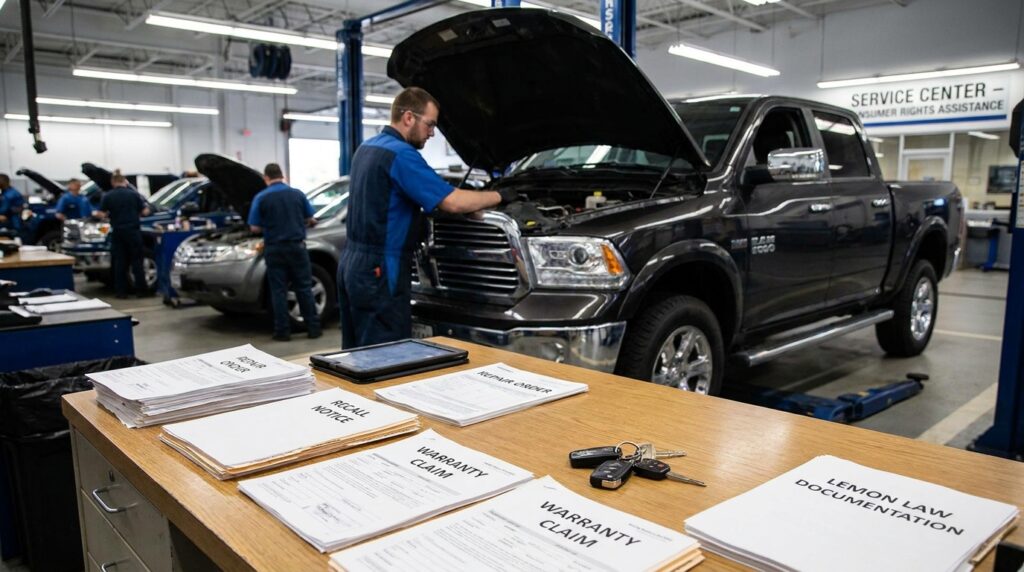
Owners do not need to wait for a catastrophic engine seizure to organize their records. Start with the purchase or lease agreement, warranty documents, recall notices, dealership repair orders, diagnostic reports, towing bills, rental-car records, manufacturer communications, emails, and text messages.
Create a chronological log showing the mileage and date of every engine-related incident and service visit. Track how many days the truck or SUV remains unavailable. If the dealer replaces an engine, short block, bearing-related component, oil-system component, or another major part, make sure that work appears clearly on the final repair invoice.
If the replacement engine develops another problem, keep those records separate so the sequence is easy to understand. The fact that a major component was replaced does not erase the prior repair history.
Do Not Assume Every GM Owner Has the Same Lemon Law Rights
A Chevrolet Silverado owner in Texas may face different statutory requirements from a Cadillac Escalade owner in California. A new vehicle may also have different protections from an older used vehicle whose original manufacturer warranty has expired.
California consumers should be particularly careful with current procedure because AB 1755 and SB 26 changed portions of the state’s lemon law process. Your site’s guide to California Lemon Law notice rules in 2026 explains why manufacturer elections, notice requirements, deadlines, and other procedural rules should be checked before pursuing a claim.
For owners nationwide, the best immediate strategy is straightforward: check the VIN for open recalls, respond to recall notices, report serious safety defects, take the vehicle to an authorized dealership when appropriate, describe symptoms precisely, and save every document.
The expanded GM
The expanded GM investigation is important because regulators are examining whether the L87 engine-failure problem extends beyond the population addressed by the earlier recall and whether prior remedies have adequately addressed the concern. That investigation remains a regulatory process and should not be treated as proof that every L87-equipped vehicle is defective.
For an individual consumer, the strongest evidence will usually be the vehicle’s own history. A documented pattern of engine knocking, bearing problems, sudden power loss, engine replacement, repeated warning lights, unsuccessful repair attempts, or extended periods out of service can provide a much clearer picture than a recall headline alone.
Owners who experience sudden loss of propulsion should also consider reporting the event to NHTSA. Consumer complaints help federal regulators identify patterns and evaluate possible safety defects. Filing a federal safety complaint is separate from pursuing a lemon law claim, but it creates an official record of what happened.
The bottom line
The bottom line is that the expanded investigation deserves attention from owners of affected Chevrolet, GMC, and Cadillac vehicles, especially those already experiencing L87 engine problems. Check the VIN, complete open recalls, document every repair, and watch carefully for symptoms that return after service.
If an engine continues failing despite warranty repairs or an affected vehicle spends significant time in the shop, the question may no longer be limited to what NHTSA or GM does next. It may also be time to determine what consumer-protection and lemon law options apply to that individual vehicle.
Disclaimer: This article provides general educational information and is not legal advice. Lemon law rights vary by state and depend on warranty coverage, vehicle history, mileage, repair attempts, time out of service, applicable deadlines, manufacturer procedures, and other facts. Consumers seeking advice about a specific vehicle should consult an attorney licensed in the appropriate jurisdiction or an appropriate government consumer-protection agency.