
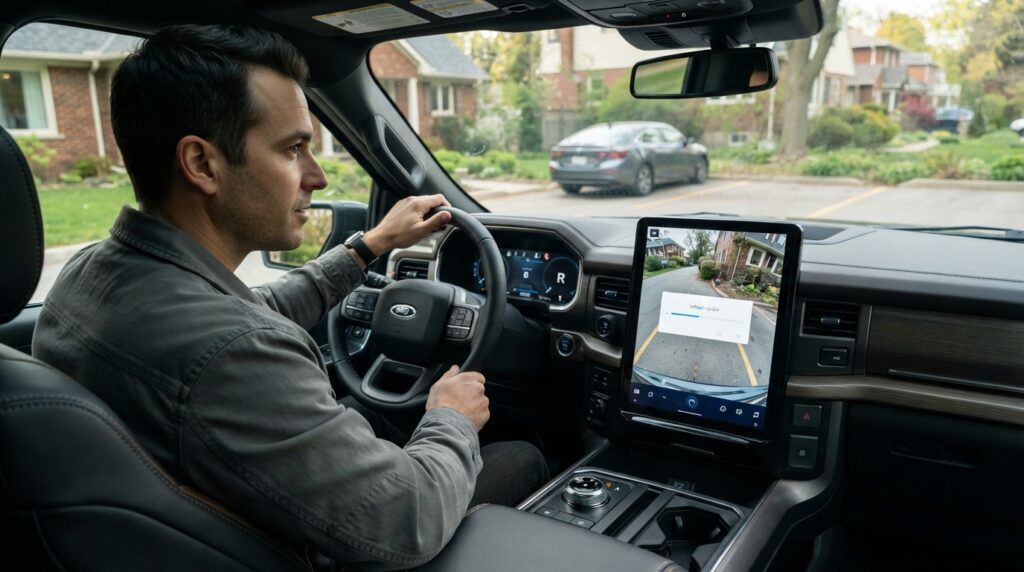
Rivian owners have a new safety recall to watch in 2026. In September, Rivian Automotive recalled nearly 99,000 electric vehicles because a software problem may obstruct the rearview camera image while the vehicle is in reverse. The issue involves a notification that can appear over the camera display, reducing the driver’s view behind the vehicle.
The recall is especially interesting because Rivian does not need to replace a physical camera, screen, wiring harness, or control module for the current remedy. Instead, the company has released a free over-the-air software update. That reflects a major change in modern vehicle repair: some safety defects can now be corrected remotely without a traditional dealership appointment.
For most owners, a successful update may resolve the issue. However, a recall does not automatically answer every lemon law question. If a rearview camera continues to fail, goes black, becomes obstructed, displays repeated error messages, or returns to the same malfunction after the recall remedy, the individual vehicle’s repair history may deserve closer attention.
The important distinction is between a recall affecting a group of vehicles and a lemon law claim involving one specific vehicle. For more background, read our guide to recalls versus lemon law claims and why a free repair may not always be enough.
What the 2026 Rivian Rearview Camera Recall Means for Owners
The National Highway Traffic Safety Administration assigned campaign number 26V597000 to the recall. According to the federal recall information, the condition involves the rearview-camera display rather than the physical camera itself. A notification may obstruct the image when the vehicle is shifted into reverse.
A rearview camera is more than an entertainment feature. Federal rear-visibility requirements are designed to improve the driver’s ability to see the area behind a vehicle while backing. When part of that image is blocked, a driver may have less information about pedestrians, bicycles, objects, walls, vehicles, or other hazards behind the vehicle.
The recall involves certain Rivian vehicles across several model years. However, model year alone should not be used to determine whether an individual vehicle is covered. Owners should verify their specific VIN using the official NHTSA recall database or Rivian’s recall information.
Why a Software Notification Can Become a Safety Defect
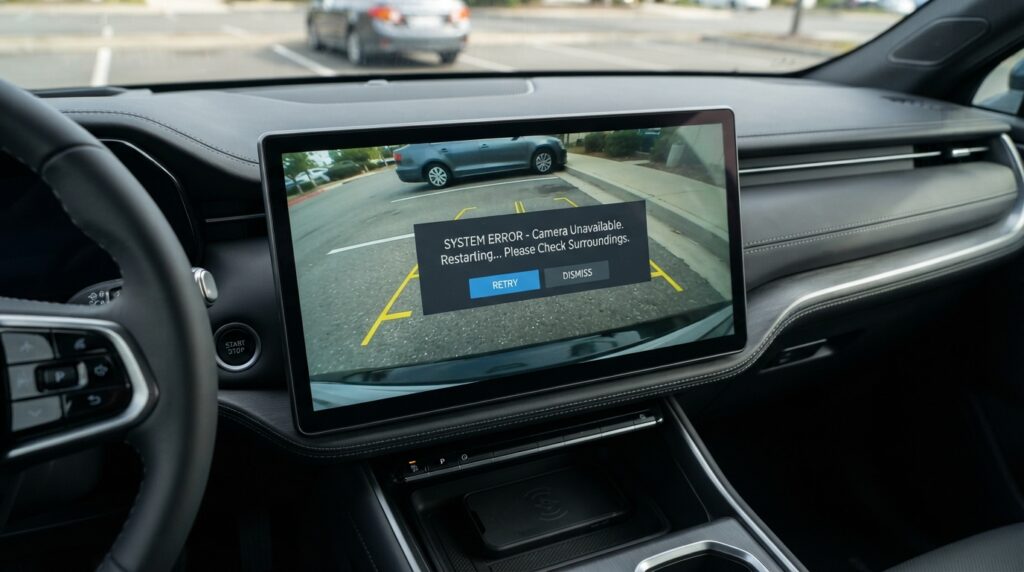
Modern vehicles depend heavily on central touchscreens and digital interfaces. A single display may control navigation, climate settings, vehicle configuration, cameras, charging information, driver-assistance features, and warning messages. This creates convenience, but it also means software behavior can affect functions that are directly connected to safe vehicle operation.
In Rivian’s case, the concern is not simply that a notification is annoying. The recall exists because the notification may interfere with the required rearview-camera image. That changes the problem from a minor interface inconvenience into a federal safety-compliance issue.
This broader issue is becoming increasingly relevant to lemon law claims. Drivers who want to understand how repeated camera, radar, lane-assistance, and other electronic safety failures may affect a vehicle should also read our guide to ADAS defects and lemon law claims.
An Over-the-Air Update Can Be a Real Repair Attempt
Some owners assume that a repair only counts when a technician physically replaces a component at a dealership. Modern vehicles make that assumption outdated. Software updates can change how important vehicle systems operate, and manufacturers increasingly use over-the-air updates to address defects.
From a documentation perspective, owners should treat a significant OTA recall remedy seriously. Keep the recall notice, confirmation that the update was installed, software version information when available, and the date and mileage when the remedy was completed.
If the rearview-camera problem never returns, the update may have done exactly what it was intended to do. If the same malfunction continues, however, the post-update history becomes important.
Which Rivian Vehicles Are Included?
NHTSA’s September 2026 recall information identifies certain 2022 through 2027 Rivian R1S vehicles, 2022 through 2026 R1T vehicles, and 2027 R2 vehicles within the campaign. The federal filing lists 98,828 potentially affected vehicles.
That number does not mean every Rivian in those model years has the defect. Recalls apply to defined production ranges and specific VINs. Owners should confirm coverage rather than assuming inclusion based only on the model badge.
The official NHTSA recall record for campaign 26V597000 is the best place to verify current federal recall information.
When a Repeated Rearview Camera Problem May Become a Lemon Law Issue
Being included in a safety recall does not automatically make a Rivian a lemon. Lemon law requirements vary by state and generally focus on the history of the individual vehicle, applicable warranty coverage, repair opportunities, and how significantly the defect affects use, value, or safety.
For example, one camera problem that disappears permanently after an OTA update is very different from a vehicle that repeatedly loses its rearview image after several software updates, service appointments, resets, or module repairs.
A recurring camera failure may also be more significant when it is connected to other electrical or safety-system symptoms. If the central display freezes, other cameras fail, driver-assistance systems become unavailable, or warning messages repeatedly appear, owners should make sure each symptom is included in the repair record.
A Recall and a Lemon Law Claim Answer Different Questions
A recall asks whether a particular safety defect or federal compliance problem affects a group of vehicles and requires a manufacturer remedy. A lemon law claim asks whether the specific vehicle owned or leased by one consumer continues to suffer a substantial defect after appropriate repair opportunities.
This distinction is important. A recall notice can become useful evidence because it may confirm that the manufacturer recognized a specific problem. However, the recall alone does not establish that every vehicle qualifies for repurchase, replacement, or compensation.
The owner’s individual records remain critical. Our article on common defects that may qualify for lemon law claims explains why persistent electrical, braking, steering, transmission, engine, and safety-system problems often require a vehicle-specific analysis.
What Rivian Owners Should Do If the Camera Problem Continues
Start by completing the recall remedy if your vehicle is included and the update is available. Safety recalls should not be ignored. After the update, test the camera during normal use and watch for recurring problems.
If the rearview image becomes blocked, freezes, goes black, loads slowly, flickers, disappears, or displays another abnormal condition, document what happened. Write down the date, mileage, software version when available, and whether restarting the vehicle temporarily solved the problem.
If it is safe, photograph or record the malfunction. A video showing a blank or obstructed camera display while the vehicle is stationary can be much more useful than trying to explain an intermittent problem days later.
Build a Repair Record After the Recall Update
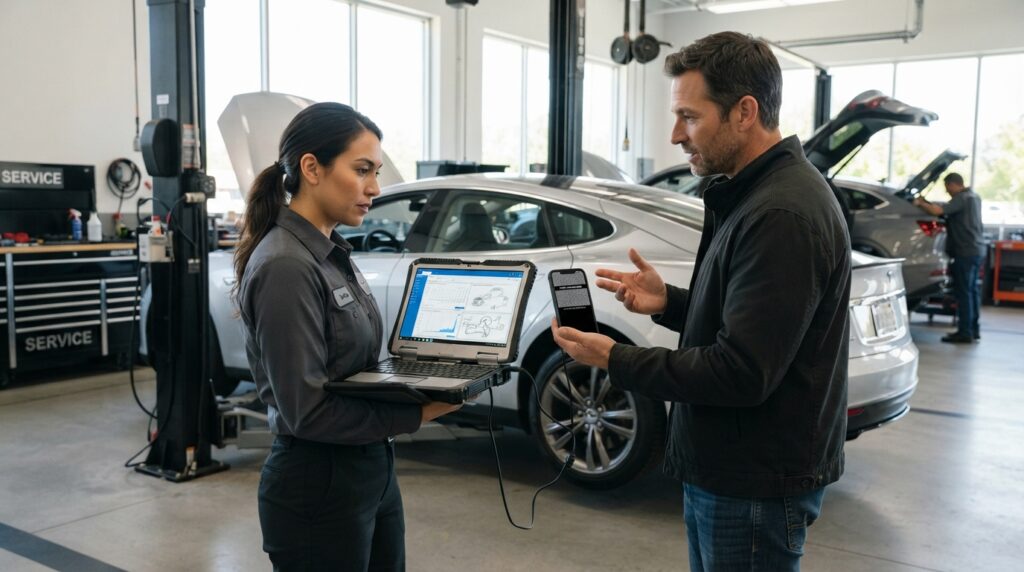
If the defect returns after the OTA remedy, report it through the appropriate Rivian service channel. Do not assume that because the software update occurred remotely there is nothing else to document.
Ask for written records showing your complaint and any diagnostic work, resets, software reinstallations, module replacements, camera repairs, or additional updates performed. The wording of those records matters.
Instead of allowing a vague note such as “customer reports display issue,” ask that the description reflect what actually happened. For example: “Rearview camera image became obstructed after recall software update while reversing” or “Backup camera display went black three times after campaign 26V597000 update.”
This level of detail can help establish whether the same condition continued after the manufacturer attempted to correct it.
Do Not Throw Away a “No Problem Found” Repair Order
Software defects can be intermittent. Your camera may fail repeatedly at home and then work perfectly when a technician examines the vehicle. That does not make the earlier events irrelevant.
A service record stating that the technician could not reproduce the problem can still establish that you reported the defect. If the same complaint appears across several visits, the records can help show a pattern.
Our guide to proving intermittent vehicle defects when the dealer says “no problem found” explains why owners should save unsuccessful diagnostic visits along with successful repairs.
Also preserve purchase or lease documents, warranty information, recall notices, software-update records, emails, service messages, screenshots, photographs, videos, towing receipts, rental expenses, and every repair invoice. Keep a simple timeline listing when the defect occurred and when the manufacturer attempted to address it.
Owners should also pay attention to related symptoms. A rear camera issue may appear isolated, but repeated display resets, sensor faults, driver-assistance warnings, electrical shutdowns, or other camera failures could provide a broader picture of what is happening with the vehicle.
The 2026 Rivian recall demonstrates how much vehicle repair has changed. A safety defect can now exist almost entirely in software, and the manufacturer’s repair may arrive through the internet rather than the service bay. But the basic lemon law question has not disappeared: did the repair actually fix the vehicle?
If the answer is yes, the recall process worked as intended. If the same safety-related malfunction keeps returning, document every occurrence and every repair opportunity. A free software update should solve the problem, not begin an endless cycle of resets and repeat failures.
Whether a specific Rivian qualifies for lemon law relief will depend on the applicable state’s law, warranty status, repair history, time out of service, and severity of the continuing defect. The strongest first step is therefore simple: complete the recall, preserve the evidence, and pay attention to what happens afterward.
This article provides general educational information and is not legal advice. Lemon law requirements and deadlines vary by state, vehicle, warranty, and individual circumstances.