
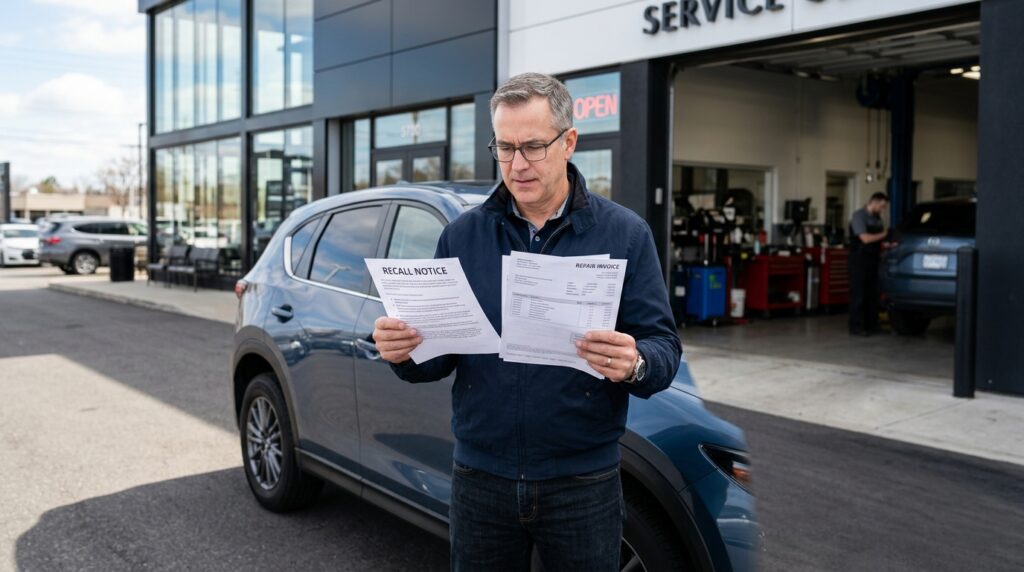
When a vehicle recall is announced, many drivers assume the problem is solved because the manufacturer will fix it for free. A free recall repair is important, especially when the issue involves safety. However, a recall does not always mean your vehicle is no longer defective, and it does not automatically erase your lemon law rights if the same problem keeps coming back.
This is where many consumers get confused. A recall and a lemon law claim are related, but they are not the same thing. A recall focuses on correcting a safety defect or standards-related problem affecting a group of vehicles. A lemon law claim focuses on whether your specific vehicle has a recurring defect that substantially affects its use, value, or safety after the manufacturer or dealership has had a reasonable chance to fix it.
That difference matters. A recall repair may solve the problem for some owners, but not for everyone. If your vehicle continues to stall, lose power, display safety warnings, suffer brake problems, experience electrical failures, or return to the dealership for the same defect after recall work, you may still need to consider your lemon law options.
What a Recall Actually Means
A vehicle recall usually happens when the manufacturer or a safety agency determines that a vehicle, part, tire, seat, or related equipment has a safety-related defect or does not meet a required safety standard. When a recall applies to your vehicle, the manufacturer generally provides a remedy at no cost, often through an authorized dealership.
That remedy may involve replacing a part, inspecting a component, updating software, repairing wiring, changing a module, or performing another approved fix. In many cases, the recall repair works. The driver receives the notice, schedules service, the dealership performs the repair, and the vehicle returns to normal use.
The problem is that not every recall remedy fully resolves every owner’s issue. Some defects are complex. Some repairs may be delayed by parts shortages. Some software updates may reduce symptoms without eliminating the root cause. Some vehicles may continue having the same defect even after the recall has been completed.
A recall focuses on a group problem

A recall usually applies to a defined group of vehicles. That group may be based on model year, production date, manufacturing plant, component supplier, software version, or other technical criteria. The goal is to address a defect that may affect many vehicles, not to evaluate the full repair history of one owner’s car.
A lemon law claim is more personal. It asks what happened to your specific vehicle. How many times did you bring it in? How long was it out of service? Did the same issue return? Did the defect affect safety, daily use, or resale value? Did the manufacturer or dealership have a reasonable chance to repair it?
This is why a recall notice can support a lemon law claim but does not automatically win one. The recall may help show that the defect was real and recognized, but your repair history still matters. You need documentation showing how the issue affected your vehicle and what happened after each repair attempt.
Free does not always mean final
The word “free” can make a recall repair sound like the final answer. In reality, free only means the owner should not have to pay for the recall remedy. It does not guarantee that the repair will permanently solve the defect in every vehicle.
If the same issue returns after recall service, do not ignore it. Schedule another service visit and make sure the repair order clearly states that the problem returned after the recall was performed. That wording can be important because it shows the original remedy may not have fixed the defect in your vehicle.
Recall notices should be saved
Many drivers throw away recall notices after scheduling the repair. That is a mistake. Keep the recall letter, email, manufacturer notice, dealership appointment confirmation, and final repair invoice. These documents can help establish when you were notified, when the vehicle was serviced, and what remedy was attempted.
Drivers should also check whether their vehicle has open recalls. The official NHTSA recall lookup tool allows consumers to search by VIN and review safety recall information. If your vehicle has an open recall, address it quickly, but keep your records in case the issue continues.
When a Recall Repair Is Not Enough
A recall repair may not be enough when the defect continues affecting the vehicle after service. For example, a recalled brake component may be replaced, but the driver may still experience brake warning lights or reduced braking performance. A software update may be installed, but the vehicle may still display driver-assistance failures. A transmission recall may be completed, but the vehicle may continue jerking, slipping, or losing power.
In these situations, the key question becomes whether the defect remains unresolved despite reasonable repair opportunities. Lemon law rules vary by state, but many claims look at repeated repair attempts, significant out-of-service time, and whether the issue substantially impairs use, value, or safety.
Why free repair can still leave you with a defective vehicle
A free repair is helpful only if it actually works. If the vehicle returns to the shop again and again, the owner is still dealing with lost time, stress, safety concerns, rental car issues, and reduced confidence in the vehicle. A driver should not be forced to accept endless repairs just because each visit is free.
This is especially true when the defect involves safety. Recurring brake issues, steering problems, engine stalling, electrical shutdowns, airbag warnings, battery defects, or driver-assistance failures can make a vehicle unreliable or unsafe. Your site’s guide on common defects that qualify for lemon law claims is a useful internal resource because it explains how persistent engine, transmission, brake, electrical, suspension, and steering problems may support a claim.
Software-based recalls are also becoming more common. Some recalls now involve over-the-air updates, module reprogramming, sensor calibration, or safety-system logic changes. If the dealership says a software update fixed the issue but the same warning or malfunction returns, review over-the-air updates and software defects to understand why recurring software problems may still matter under lemon law.
Repeated post-recall repairs can strengthen the timeline
After a recall repair, pay close attention to whether the defect returns. If it does, document the date, mileage, warning lights, driving conditions, and symptoms. Then schedule service and ask the dealership to write the complaint accurately.
For example, do not let the repair order say only “customer states vehicle issue.” Ask for specific wording such as “same transmission hesitation returned after recall repair,” “rear camera failure continues after software update,” or “brake warning light returned after recall campaign completed.” Specific records are stronger than vague records.
A buyback may still be possible after recall work

Some consumers worry that accepting a recall repair means they gave up their right to pursue a lemon law claim. In general, getting the recall repair performed does not automatically prevent a future claim if the vehicle remains defective. In fact, the recall repair may become one of the repair attempts in your timeline.
If your vehicle spends a long time at the dealership because recall parts are unavailable, the out-of-service time may also matter. Your site’s article on the 30-day rule and global supply chain backlogs explains why long repair delays can become important in lemon law situations. Parts delays may be frustrating for the dealership, but they can still leave the consumer without the vehicle they paid for.
What documentation should drivers keep?
Documentation is the difference between a complaint and a claim. If your vehicle has been recalled and the problem continues, keep every record connected to the issue. This includes the recall notice, repair orders, warranty paperwork, photos of dashboard warnings, videos of the malfunction when safe to capture, rental car receipts, towing invoices, text messages, emails, and dealership appointment records.
You should also create a simple defect log. Write down the date, mileage, symptoms, weather, driving condition, and whether the vehicle was taken in for service. If the dealership says it cannot duplicate the issue, keep that repair order too. A “no problem found” note may still show that you reported the same defect.
For the next steps, read How to File a Lemon Law Claim. That guide explains why recurring issues, repair invoices, communication records, warranty documents, and a repair timeline are important when preparing a claim.
A recall is serious, and drivers should not ignore it. If your vehicle has an open safety recall, schedule the free repair as soon as possible. But do not assume that a recall repair automatically ends the problem. If the same defect continues, the vehicle remains unreliable, or the dealership keeps applying fixes that do not last, you may have more options than another service appointment.
The practical rule is simple: get the recall fixed, save the paperwork, and watch what happens next. If the issue is truly resolved, that is the best outcome. If it keeps coming back, the recall record, repair history, and out-of-service timeline may help show that your vehicle is not just recalled — it may be a lemon.