
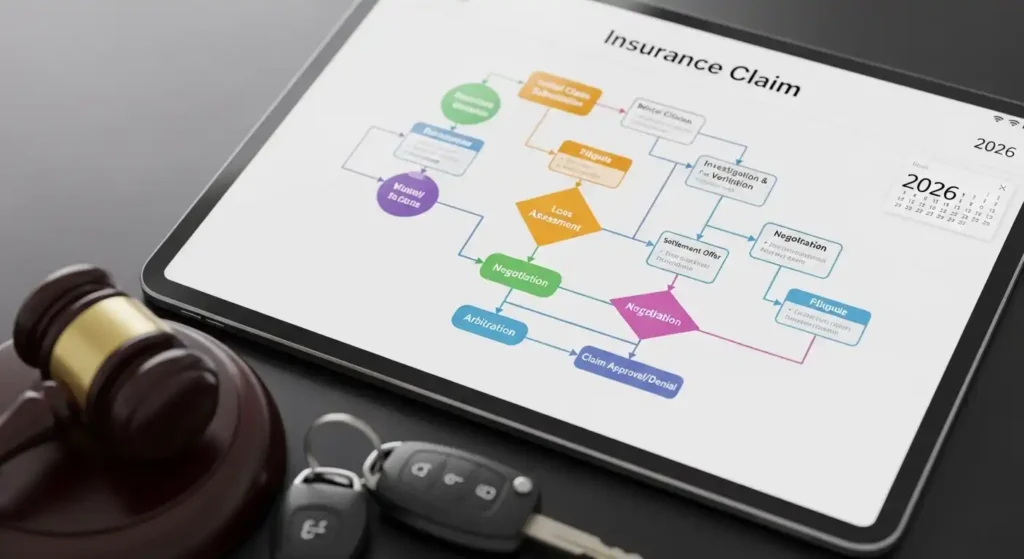
If you have attempted to file an insurance claim in early 2026, you likely realized very quickly that the “simple” process promised in commercials is a thing of the past. Whether you are dealing with a vehicle buyback, a property damage dispute, or a liability issue, the friction between policyholders and carriers has reached an all-time high. But what is driving this sudden surge in insurance claim complexity?
The answer isn’t just “bureaucracy.” We are currently witnessing a perfect storm of legislative shifts, economic pressures known as “social inflation,” and the rapid integration of AI in claims adjusting. Understanding these forces is the only way to ensure you receive a fair settlement in the current legal climate.
1. The Rise of ‘Social Inflation’ and Nuclear Verdicts
The most significant driver of insurance claim complexity in 2026 is a phenomenon called social inflation. Unlike standard inflation, which tracks the rising cost of parts and labor, social inflation tracks the rising cost of legal settlements and jury awards.
Over the last year, “nuclear verdicts”—jury awards exceeding $10 million—have become increasingly common in California. Juries are no longer just looking to make a plaintiff “whole”; they are increasingly using their verdicts to punish corporations and insurance carriers for perceived systemic failures. Because insurers are terrified of these massive court losses, they have tightened their pre-litigation claims processes. This means more documentation, more scrutiny of your evidence, and more “hoops” to jump through before a check is ever cut.
2. AI Adjusters vs. The Human Element
 By mid-2026, nearly every major carrier has implemented “Autonomous Claims Processing.” While this was marketed as a way to speed up payouts, it has often had the opposite effect for complex cases. Algorithms are designed to look for “deviations” from a standard data set. If your lemon law case or injury claim has unique nuances, the AI may automatically flag it for a secondary manual review, which can add weeks or months to the timeline.
Furthermore, these AI models are trained on historical data. They don’t always account for the 2026 reality of soaring repair costs for electric vehicles or the specialized labor required for modern construction. This disconnect often leads to “low-ball” initial offers that require a high level of technical expertise to successfully challenge.
3. The Cross-Industry Ripple Effect
Insurance claims don’t exist in a vacuum. The complexity we see in automotive claims is mirrored in the heavy industries. For instance, in the world of high-stakes litigation, a construction accident lawyer will tell you that the complexity of a worksite claim has nearly doubled due to multi-layered insurance requirements and new 2026 safety regulations. When one sector sees a spike in claim costs, carriers raise the barrier for entry across all sectors to preserve their loss ratios.
We see this locally as well. In regions like Butte County, the cost of securing liability insurance for heritage sites or small businesses has become a significant hurdle. The higher the complexity of the claim, the higher the premiums, creating a cycle that affects every consumer’s wallet.
4. New Legislative Barriers: AB 1755 and Beyond
Specifically for California residents, new laws like AB 1755 have introduced “Opt-In” tracks for manufacturers. This has added a new layer to the claim process: before you even argue the merits of your case, you must determine which “track” your manufacturer belongs to. This procedural hurdle is a prime example of why claims are no longer a “do-it-yourself” project for most people.
5. Strategic Documentation: How to Overcome the Complexity
 If you are currently facing a complex claim, your strategy must evolve to meet the 2026 standards. Here is how to navigate the gridlock:
- Digital Trail: Maintain a timestamped digital folder of all communications. In the age of AI adjusting, “he said, she said” won’t win a claim—metadata will.
- Technical Evidence: For vehicle claims, don’t just provide repair orders. Provide diagnostic logs. For property claims, provide drone footage or 3D scans if possible.
- Legal Intercession: Because insurers are using high-level data to deny claims, you often need a legal professional who understands those same data points to force a fair negotiation.
Conclusion: The Future of Claims
The complexity of insurance claims in 2026 is a reflection of a society that is more litigious, technologically advanced, and economically volatile. While the process is more difficult, the consumer protections in California—particularly the Song-Beverly Act—remain some of the strongest in the nation. The key is no longer just “having a claim,” but having the documented evidence and legal strategy to cut through the noise of social inflation.
Don’t let the complexity discourage you. Understanding why the barriers are there is the first step toward breaking through them and securing the settlement you deserve.