
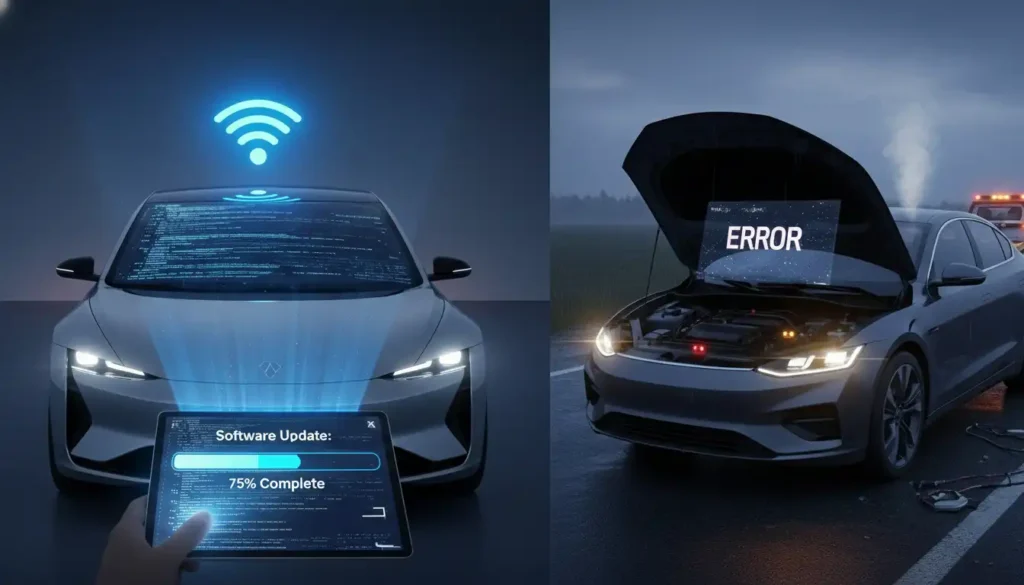
Cars are not just machines anymore. Many modern vehicles function more like computers on wheels, powered by software that controls everything from navigation systems to braking sensors and driver-assistance features.
Because of this shift, more manufacturers now rely on over-the-air (OTA) updates to fix issues remotely, similar to how smartphones receive software patches.
But what happens when an update creates new problems instead of solving them? Or when a software glitch keeps returning no matter how many times the dealership tries to fix it?
In many cases, recurring software defects may raise an important question:
Could your vehicle qualify as a lemon under lemon law?
This guide explains how lemon law claims may apply to software-related vehicle defects, what to watch for, and what documentation may help support your case.
What Are Over-the-Air Updates in Vehicles?
An over-the-air update is a software update delivered remotely to your vehicle, without requiring a visit to the dealership.
Manufacturers use OTA updates to:
- Fix bugs in infotainment systems
- Improve battery or charging performance in EVs
- Adjust driver-assistance features
- Patch cybersecurity vulnerabilities
- Add new features after purchase
While OTA updates are convenient, they can also create complications when the update introduces defects or fails to resolve an existing issue.
What Counts as a Software Defect Under Lemon Law?
A software defect is any recurring malfunction caused by the vehicle’s computer systems, firmware, or electronic modules rather than a traditional mechanical part.
These defects may still affect the vehicle’s:
- Safety
- Use and drivability
- Value
- Reliability
Common software-related problems reported by drivers include:
- Touchscreens freezing, rebooting, or going black
- Backup cameras failing or displaying errors
- Driver-assistance systems shutting off unexpectedly
- Random warning lights triggered by sensor malfunctions
- EV charging issues tied to battery management software
- OTA updates that cause new performance or safety concerns
Even though these issues may not involve a broken engine or transmission, they may still qualify as serious vehicle defects.
You can also review other qualifying defects here:
Common Defects That Qualify for Lemon Law Claims
Why Software Problems Are Becoming More Common in Lemon Law Cases
As technology becomes more central to vehicle operation, lemon law claims increasingly involve electronic and software failures.
Unlike mechanical problems, software issues may be harder to diagnose because they are often:
- Intermittent
- Difficult to replicate at the dealership
- Resolved temporarily, only to return later
- “Fixed” with updates that do not address the root problem
Manufacturers may argue that a software update resolved the issue, even if the driver continues experiencing the same malfunction afterward.
That is why documentation and repair history matter so much in these cases.
Can a Vehicle Still Be a Lemon If the Defect Is Software-Based?
Yes, a vehicle may still qualify under lemon law even if the defect is primarily software-related.
Lemon law protections generally apply when:
- The vehicle has a substantial defect covered by warranty
- The manufacturer or dealer has had a reasonable number of repair attempts
- The defect persists or continues affecting use, safety, or value
A frozen infotainment screen might seem minor at first, but if it disables safety features like cameras, alerts, or navigation, it may become a serious concern.
If you want a broader overview of lemon law protections, start here:
What Is Lemon Law and How Does It Protect Consumers?
Signs Your Software Defect May Support a Lemon Law Claim
Not every glitch leads to a lemon law case, but certain patterns may raise red flags.
Your vehicle may qualify if:
- The problem keeps returning after repairs
- The defect affects driving safety or normal use
- The dealership cannot permanently fix the issue
- The vehicle spends significant time out of service
- Repair orders show repeated complaints
For example, if your backup camera fails repeatedly despite software updates, that may be more than just an inconvenience.
What to Document When OTA Updates or Software Issues Keep Happening

Software defects can be harder to prove than mechanical breakdowns, so keeping strong records is essential.
Helpful documentation includes:
- Photos or videos of error messages or screen failures
- Dates and times when the issue occurs
- Descriptions of what the vehicle was doing when it happened
- All repair orders, even if the dealer says “no issue found”
- Notes showing software updates or module replacements
The more consistently the issue appears in your repair history, the stronger your claim may become.
How California Lemon Law Changes May Affect These Claims
If your vehicle is covered under California lemon law, recent reforms have added new procedural requirements in some situations.
Depending on the year of the vehicle and the type of claim, consumers may need to provide additional notice before filing.
You can learn more here:
What California’s AB 1755 Means for Lemon Law Claims in 2025
For broader claim trends, this may also help:
Trends in California Lemon Law Cases and What It Means for You
Steps You Can Take If Your Vehicle Has a Recurring Software Defect
- Bring the vehicle in as soon as the issue repeats
A documented repair attempt is often necessary under lemon law. - Explain the problem clearly in writing
Ask the service department to record your complaint accurately. - Keep every repair order and invoice
Even unsuccessful repairs help establish a history. - Save evidence of the defect
Videos and screenshots can be useful for intermittent issues. - Review the lemon law process in your state
This guide provides a helpful breakdown:
Frequently Asked Questions
Can a software defect qualify under lemon law?
Yes. If the defect substantially affects safety, use, or value and continues after reasonable repair attempts, it may qualify.
Does an OTA update end the lemon law claim?
Not always. If the issue returns or continues despite updates, the repair history may still support a claim.
What if the dealership says they cannot replicate the problem?
This is common with software defects. Consistent documentation, videos, and repeat repair visits may help establish the pattern.
Conclusion
As vehicles become increasingly software-driven, lemon law claims are evolving beyond engines and transmissions.
Recurring defects tied to over-the-air updates, infotainment failures, driver-assistance malfunctions, or electronic system errors may still qualify under lemon law when they persist after repair attempts.
If your vehicle continues experiencing the same software-related problem, keeping detailed records and understanding your legal options may help you determine your next steps.
For more lemon law resources, explore the Lemon-Law.net blog for updated consumer guidance.